Diablo Immortal's Evolving Landscape
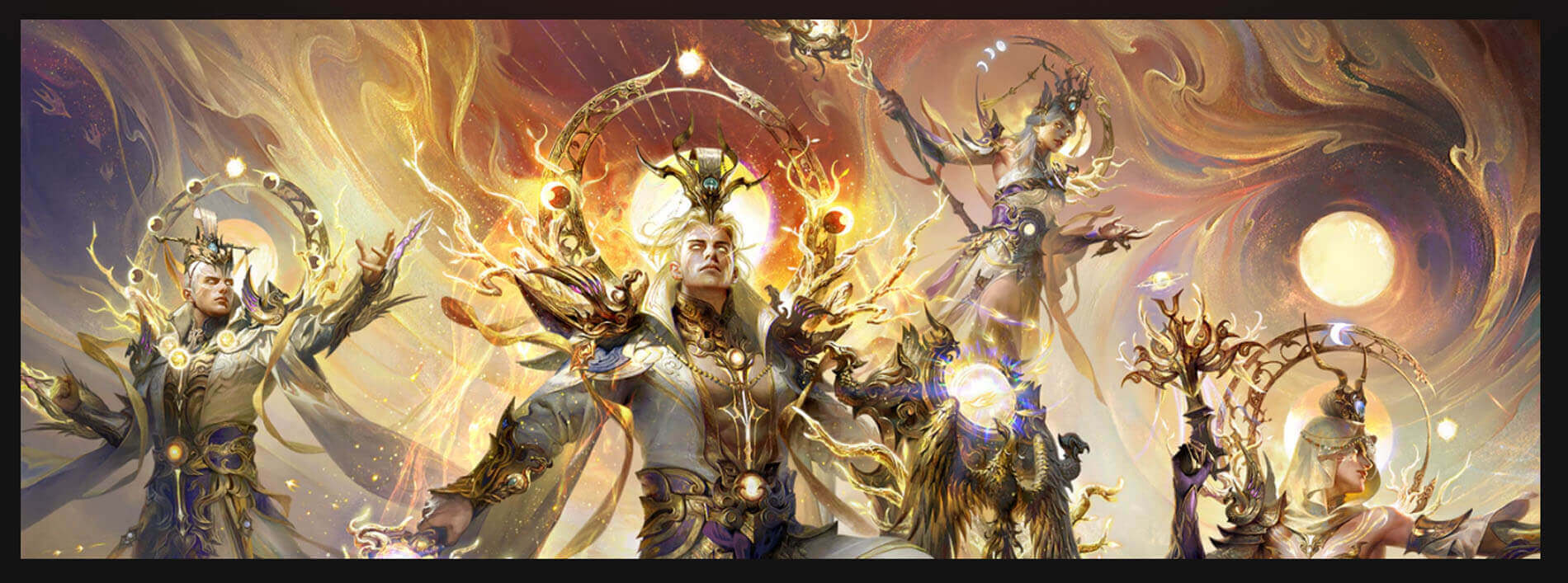
Maintaining player involvement and durability depends greatly on the ongoing development of large multiplayer online role-playing games. Regular major content releases from Blizzard Entertainment's Diablo Immortal, a mobile and PC hybrid, highlight this dedication. Often celebrated by its thematic title, one such change reflects not only the inclusion of fresh cosmetic goods but also a major realignment of the competitive and cooperative environment inside Sanctuary. These big changes, especially the ones that have to do with structured PvP and getting gear, help to balance the power dynamics and make new challenges for both experienced players and new adventurers. The developers' plan to keep the game dynamic following times of strong cross-server competition and meta changes is highlighted by the most recent large content update, which includes a fresh Battleground mode, upgraded gear, and reestablished competitive structures.
The Novelty of Core of Chaos Convoy
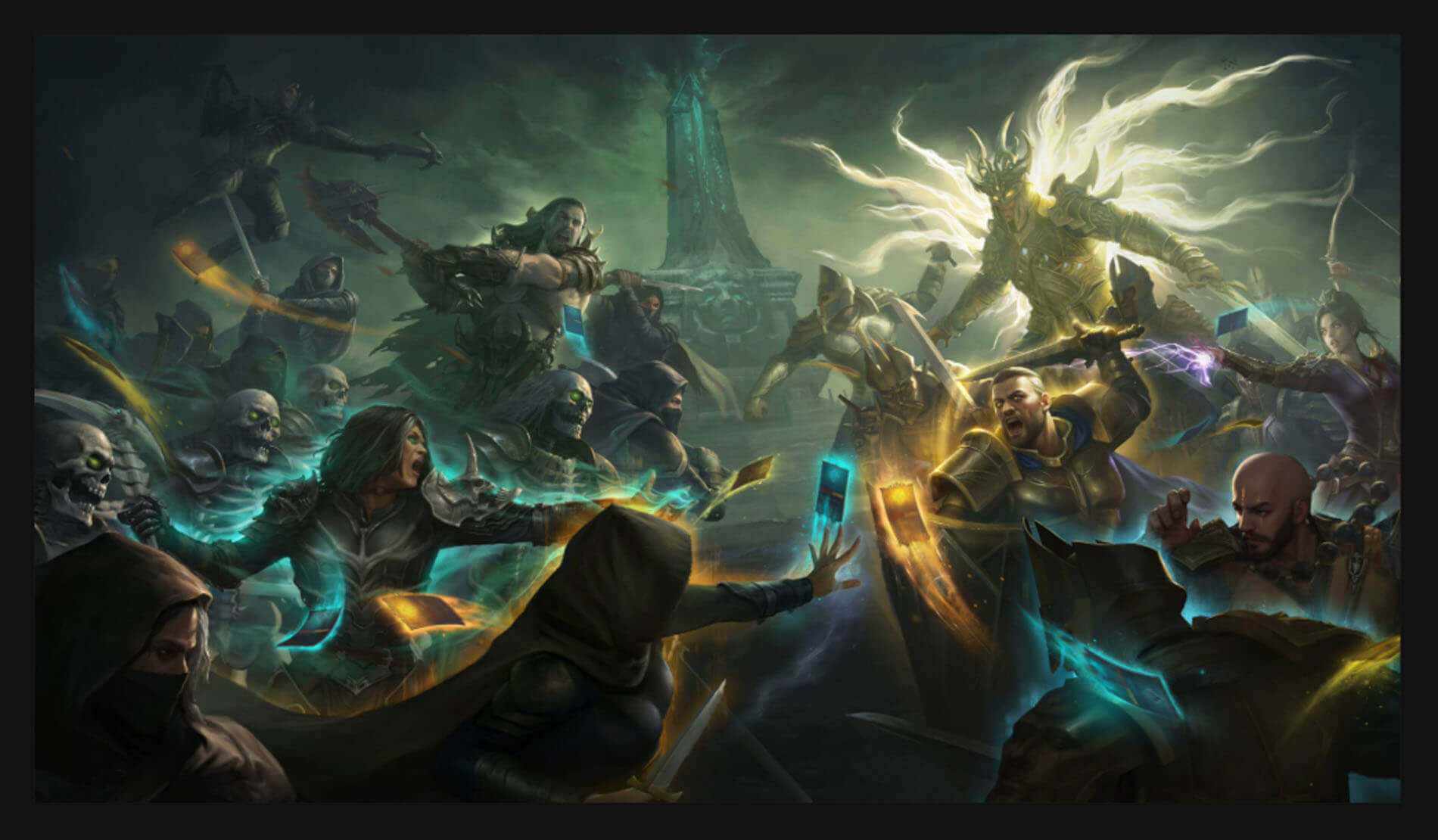
The new Battle Pass at the centre of this seasonal update is thematically centred on the barren, icy reaches of the World's Crown. This path of progression is the main way that players are rewarded for playing well consistently throughout the season. Unlike completely random drops, the Battle Pass promises practical resources and sure cosmetic improvements when certain milestones are achieved. Keeping player enthusiasm throughout weekly play sessions depends on having clear, attainable objectives provided by this organized strategy. The Battle Pass offers new, themed objectives that could need certain loadouts or interaction with newly introduced features, which guarantees that even well-known characters have fresh advancement goals and supplements current endgame loops for elite players.
Synergy Between Events and Player Choice
The inclusion of creative gameplay elements meant to defy accepted conventions has been a main feature of recent expansions. A good illustration of this approach of design is the limited-time Chaos Convoy Battleground mode. Unlike typical, static PvP settings, Chaos Convoy uses random power progression as its main feature. This system compels players to discard their pre-conceived perfect builds and instead interact in real-time adaptation. Gifts of Corvus are at the heart of this style as they are strong, match-changing fighting modifiers. Offered intermittently throughout the game, these gifts bring uncertainty and chance.
The design favours tactical flexibility above strict preparation. Players first choose a Gift; they can reroll once, which determines the course of their character's temporary form. Importantly, new Gifts show up every 90 seconds, forcing gamers to include these surprising buffs—ranging from more damage-over-time effects to spectral friends and lowered cooldowns—into their current gameplay. Over one hundred possible Gifts guarantees that the experience stays unexpected and fresh throughout several playthroughs as the amount of realistic build options explodes. This design tests a player's basic knowledge of their class mechanisms as opposed to their proficiency with a particular, ideally optimized gear set.
Balancing Competition and Reward
Beyond the brief thrill of seasonal modes, large changes also meet the long-term objectives of committed gamers by means of improved gear and formalised contests. Strong new Legendary gear will influence the general power creep and build diversity accessible in structured PvP as well as PvE. For players who have perfected the current endgame, getting these fresh goods provides real, long-lasting incentives to improve.
Additionally, the comeback of competitive PvP events points to a renewed focus on high-stakes, organized conflict. Formal tournaments offer reputable venues for the finest players to show their worth after times when players have improved their abilities throughout cross-server Battleground matchmaking. This loop of content keeps people interested because there are always new things to learn, new ways to play, and old tournaments to participate in. Often related to particular dates following server maintenance, the coordination of these rollouts produces obvious excitement in the community centred on rapid involvement with the new Battleground format and then preparations for competitive ladders.
The Multifaceted Impact of Corvus Gifts
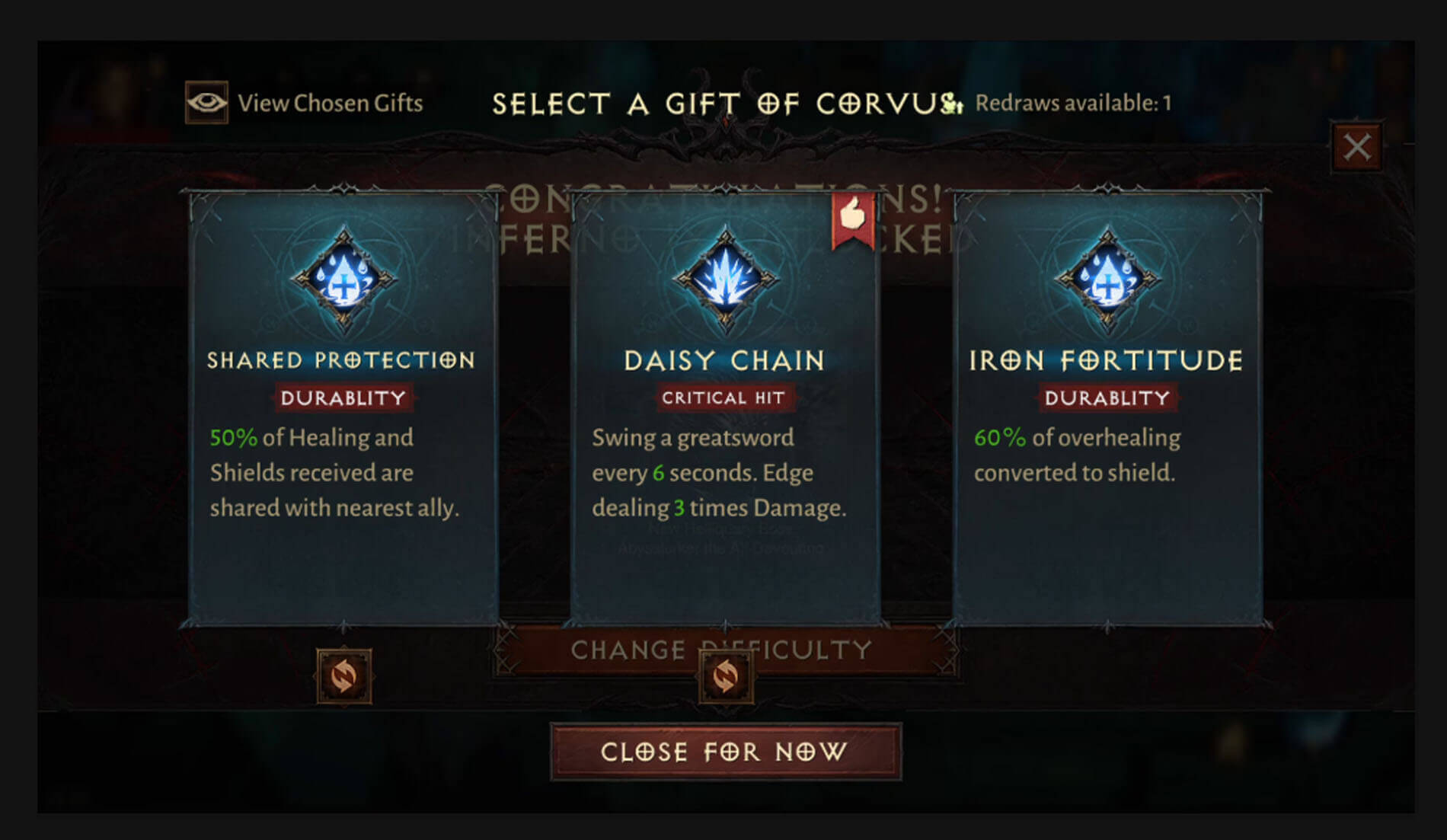
Within the Chaos Convoy environment, the gifts of Corvus are the main sources of variation. Their impact reaches almost every facet of player performance. Think about how damage over time effects get better; this one thing can make a build go from being weak to being really important for a good strategy. It can also make a build go from being bad to being good. Improved movement speed also significantly changes tactical positioning, which allows players to control engagement ranges or get out of bad spots far more readily than they could in regular modes.
Introducing spectral weapons that fight with the player greatly boosts individual firepower, essentially serving as temporary, AI-controlled allies. This addition to fight presence significantly changes encounter pacing and requires players to control not just their own actions but also the positioning and threat profile of their spectral allies. Reducing ability cooldowns also squeezes the decision-making window, therefore encouraging a more aggressive and skill-based style of play in which resources are swiftly and regularly managed. Stacking these modifiers produces exponential power increase, which guarantees that no two combat situations feel the same.
Building Limitless Combinations
With over one hundred different Gifts to choose from, the number of ways to build things in the Chaos Convoy mode is very high. This means that there are almost no limits to how you can put things together.
This unpredictability pushes players away from proven meta builds that would otherwise rule regular gaming. A player who would usually depend on strong armor and close-range attacks could find themselves forced to go for a very mobile, ranged damage profile thanks to lucky drops of spectral weapon Gifts and speed boosts. Players have to examine their present Gift loadout, spot developing synergies, and change their tactical approach halfway through a game to benefit from these rewards for creativity and demand fast thinking. In competitive or difficult gaming settings, this continual change promotes great flexibility, a very important ability. The system is basically turning strategic improvisation into a game.
Ensuring Balance Through Selective Restriction
Although the Gifts of Corvus have a lot of power, the developers have taken important steps to make sure the event stays competitive and fair. A purposeful act of system isolation is the clear disabling of Paragon Skills, Specializations, Warband Remnants, and particular Boss Skill affixes. To guarantee that success is driven only by the decisions taken about the random Gifts and the instant tactical execution during that particular run, Chaos Convoy deliberately puts these standard, ongoing progression systems on hold. If these constant power systems remained active, pre-existing character traits would dominate the unpredictability of the Gifts and negate the main design objective of the event, which is to assess player ability under fresh, randomized circumstances. This selective disabling guarantees that players start on a more equal, albeit somewhat erratic changed playing surface. Furthermore, the incentive system awarding participation twice Battleground incentives motivate broad involvement with this special, balanced temporary mode.
Integration with the Sanctuary Ecosystem
Any significant change in a game like Diablo Immortal depends not just on the calibre of the new feature but also on how well it fits with the current world of Sanctuary. PvE players, who might avoid fierce PvP, still have worthwhile material to overcome thanks to the new dungeon foes and hard tasks that reward them with advancement pertinent to the new power ceiling set by the update. The celebratory seasonal events that go along with these patches help to ground the technical changes within the continuing plot of the game, therefore providing a shared group experience that briefly draws attention away from just competitive climbing to participation and celebration. By taking this all-encompassing approach, we can make sure the upgrade addresses the many reasons why players play.
Centred on the Chaos Convoy and the reconfirmation of competitive play, the main content update highlights a committed attempt by the creators to revive Diablo Immortal's endgame. The upgrade effectively challenges accepted meta techniques by injecting ephemeral, extremely erratic gameplay via randomizing power modifiers. For committed players, the return of competitive frameworks and the addition of fresh Legendary gear offer long-term objectives at the same time. This deliberate method of content delivery, combining novelty with proven progression paths, guarantees that the moon's ballad appeals throughout Sanctuary, keeping the experience interesting and guaranteeing that players always draw their blades against fresh obstacles.
New Legendary Equipment’s
Shifting Paradigms in Barbarian Gameplay

The beginning set of Legendary items described for the Barbarian class clearly shows this change in perspective. Barbarian builds have always either concentrated on pure raw damage or ongoing area control. The new technology, however, is mostly about defensive scaling and how different skills can work together. For example, the main hand item Carnage Call directly connects the utility skill Demoralize to offensive output by having it do damage based on maximum Life. This points to a possible road for Life-stacking constructions that can be both offensive and defensive. The Thrashabout off-hand also significantly changes Hammer of the Ancients, linking its damage to maximum Life while providing momentary immunity to crowd control throughout a crucial attack series. This pairing targets a frequent flaw in Barbarians: susceptibility during drawn-out animation sequences. A clear, self-sustaining damage reduction loop develops when the Yoke of Legacy chest piece—which offers damage reduction following the Hammer of the Ancients—is used with it. This turns the regular heavy-hitter into a more durable front-liner able to take a beating while dealing out damage matching their own bulk.
New Tactical Dimensions Through Utility Integration
Beyond pure strength improvements, the new legendries underline strategic integration. Reliable crowd management is added to a movement talent with the Ram Cords trousers, which make Leap inflict Fear. In challenging content with a high enemy density and a lot of lethal attachments, the capacity to control enemy placement and stop harmful casting is quite helpful. This prepares the scene for a controlled encounter by allowing for creative arrangements whereby a Barbarian can start a fight with a disruptive Leap, then follow up right away with the damage reduction from the Chest piece. By increasing maximum Life and using Cowardice, which enhances damage suffered by foes under knockback influence, the Shockscowl helm extends this tactical aspect even further and works flawlessly with the Leap and Hammer of the Ancients powers. Rather than depending on basic cooldown cycling, this collection of things promotes a playstyle that combines movement, crowd management, and damage boosting into a coherent, responsive sequence.
The Broader Implications for Build Customization
These very specialized legendries help to keep player interest high by stopping build stagnation, so fulfilling an important role. In games that last a long time, once a build is found to be the best, innovation usually stops until the next expansion. The developers encourage experimentation by adding tools that enable unusual scaling measures, like greatest Life determining main damage output. Players are challenged to investigate relationships between offense, mobility, and defence in hitherto less than ideal or unattainable ways. The Hurtling Frame shoulders, which gives Fortified status and raises core stats when you Leap, makes mobility even more important as a way to defend and attack than as a way to get around. This focus on multi-layered effects guarantees that players aiming to maximize their performance in Inferno XI must interact closely with the itemization system, therefore promoting a meta game rich with many different viable builds instead of a single dominant setup.
Enhancing Core Damage Mechanics of the Blood Knight

The starting damage of the Blood Knight is being much increased by synergistic legendary effects, especially those affecting the Umbral Lance skill. Increasing consequent damage taken by adversaries hit inside a small window, the Stirred Depths main-hand tool directly pushes constant use of this talent. This moves the emphasis away from infrequent strong hits and toward a regular beat of strikes needed to keep a damage multiplier going. Adding to this, the False Container casually adds a fresh lance application trigger mechanism: automatic firing dependent on the player losing or gaining health. This guarantees that the Blood Knight keeps constant pressure even during times of self-healing or rapid incoming damage, hence turning a resource management decision into a dynamic response to fight events. Such integration calls for more mechanical knowledge of the healing efficiency and defensive cooldowns of the class.
The Transformation
Perhaps the most game-changing aspects of the new mythological set are those that include the Blood Knight's unique gimmick, the Abomination transformation. The creators have obviously meant to either fix earlier flaws or enhance the dream world connected with this transient condition. The Shaded Teeth chest piece makes the Blood Rush (Abomination) variant more useful because it makes it harder for people to target during the dash. This is very important because it gives it a way to defend itself from attacks. It also makes the variant knockback and bleed application better. This is vital for negotiating close encounters.
Moreover, the Crushed Pity pants offer the changed state a totally different offensive weapon. Along with immunity to control loss, the Abomination's extra slam ability guarantees consistent positioning and sustained main attack damage amplification via marks. This implies a build route in which the changed state turns into a long-lasting powerhouse instead of a short burst window. By eliminating the need for Anger consumption and substituting a ramping Damage and Life Drain effect instead, the Tameless Revelry shoulders address a major transformation cost. This adjustment significantly affects the financial cost of the transformation, which enables more frequent use and rewards those who can keep the form as the damage and drain keep mounting.
Defensive and Resource Optimization
Beyond simple aggression, the new equipment covers survival and crucial quality of life concerns. Reducing damage received from Bleeding foes, the Hearty Glutton helm offers focused defence for the Abomination form. In settings where several monster kinds inflict ongoing damage effects, this focused mitigation guarantees the transformation's continued viability against particular threats and assures its sustained power. Removing the Anger cost from the shoulders directly affects resource management by freeing up energy that could have been used for transformation, therefore powering other important skills or just extending the uptime on the empowered state. These items together promote a playstyle that strongly encourages frequent transformation usage and great weaving between the normal and monster forms.
Synergies of Shock and Critical Damage of the Crusader

The Crusader becomes a great chain-lightning expert as several fresh items specifically address the interaction between shock effects and critical damage amplification. The Cruel Attraction's primary hand weapon adds a constant, automatic source of electrical attack by awarding Sacred Fire Critical Hits with bonus holy lightning damage. This goes really well with the Pained Sentiment off-hand, which makes foes hit with a Critical Hit take more damage from Condemn. Condemn, now changed by the Shock Doctrine chest piece, turns into the center. The Shock Doctrine turns Condemn into an electric field that follows the player and keeps shocking them to make energy. This feedback loop is quite important: Condemn provides Shock, which exposes adversaries to more critical damage from Pained Sentiment and produces resources for more lightning strikes. This complex mix points to a build whereby slow, heavy single strikes are less important than movement and regular application of Condemn.
Mobility and Crowd Control Enhancements
Through potent mythical effects linked to movement abilities, the redesign also greatly enhances the sometimes-criticized mobility weaknesses of the Crusader. The Storm Saddle pants transform Draw and Quarter into a mounted charge with the Storm Steed, offering a direct improvement that gives speed and immunity to slows. This essentially resolves kiting problems frequently seen in high-level meetings. Moreover, this improved mobility helps to bolster attacking ability. The Azure Sacristan helm transforms Fist of the Heavens into a charged, forward-dashing strike that shocks enemies, an impact especially enhanced when the Crusader is already mounted and phantom steeds join the attack. This combination highlights a design concept whereby crowd control and direct multipliers for damage depend on mobility; not only survival ability. A mounted Crusader using Fist of the Heavens is extremely effective at breaking up groups since he has amazing power and works well with phantom strikes.
Targeted Critical Hit Optimization
The tools in the kit include particular optimization features meant to guarantee that these electrically charged strikes always hit with full force. The Jolt of Conviction shoulders straight raise Fist of the Heavens' Critical Hit Chance especially against Shocked foes. This shoulder piece provides a trustworthy window for huge Fist of the Heavens bursts following a Condemn deployment as the Shock Doctrine chest piece guarantees Condemn is always applying Shock. This layered approach to damage guarantees that the build is not dependent on simple luck for great output; rather, the player deliberately controls status effects (Shock) to unlock more critical potential. The Cruel Attraction weapon also relies on critical hits to trigger its secondary lightning damage, tying the entire system back to the fundamental statistic of critical chance, whether through gear optimization or skill interaction.
Joint Enhancements to Core Skills of the Demon Hunter

The newly added Legendary items aim squarely at honing the Demon Hunter's utility and main damage-dealing abilities. The interaction between Quickthorn (Main Hand) and Capricious Ambush (Shoulders) specifically targets Rain of Vengeance. Quickthorn's extra to Movement Speed for this power enables improved positioning, a crucial element in an action RPG, while Capricious Ambush turns the ability into a tool for area denial that automatically stuns foes whenever other abilities connect. Rain of Vengeance is transformed from a simple damage cooldown into a strong crowd control and area saturation device with this mix.
The adjustments to the Sentry skill also show a push for automated engagement and more dependable critical strikes. Relentless Hunt changes the Sentry from a fixed turret into a dynamic, responsive buddy that fires and launches explosive missiles automatically when the Demon Hunter approaches nearby. Malicious Contrivance raises Sentry Critical Hit Chance upon use. This combination implies a plan whereby the player gains from proactive skill usage that instantly boosts their automated damage sources, therefore reducing downtime between key rotations.
Transformative Impact on Vengeance
Perhaps the most significant changes are observed in the gear influencing the Vengeance ultimate ability, particularly via Protracted Wrath (Pants) and Cloak of Knives (Chest). By changing the Demon Hunter into an "avatar of vengeance," Cloak of Knives gives a big defensive and offensive boost. It also gives immunity to knockback and crowd control and adds new active skills. This turns Vengeance from just a simple damage amplifier into a real engagement state, so the player can safely reposition or make high-risk moves.
Extended Vengeance duration based on effective critical hits from other abilities helps to supplement this. Played properly, Vengeance can be maintained for far longer lengths if a Demon Hunter takes vital damage, therefore producing a near-permanent uptime on the enhanced avatar state. This synergy promotes a high critical hit chance build strategy; the more consistently the Demon Hunter scores crits, the longer they stay in their strongest form. This pushes the class away from burst timing and toward sustained, high-octane output based on continuous mechanical performance.
Strategic Implications and Build Diversity
Taken together, these six items drive the Demon Hunter archetype toward a very mobile, aggressively sustained damage dealer who uses automatic turrets with strong personal cooldowns. While the increased Sentries offer continual damage that drives the Vengeance extension from Protracted Wrath, the movement speed bonus from Quickthorn helps the continuous repositioning required to activate the automated stunning from Capricious Ambush. This setup encourages players who can easily switch between placing Sentries, keeping Vengeance uptime, and using Rain of Vengeance intelligently for control. The new legendries, while concentrating primarily on current abilities, do not particularly impose a particular build; rather, they offer strong tools that reinforce current styles, including those emphasizing great critical damage or those stressing utility via Sentry placement.
Enhancing Summoning Power and Crowd Control of the Druid’s

A sizable part of the fresh equipment tackles the Druid's dependency on summoned allies head on. The Main Hand object, Bristlebough, changes the way Surging Stone can be used. It now has strong crowd control, which lets it pull foes in and stun them while also giving nearby summons a crazy Attack Speed boost. It doesn't just do damage. The Druid may start fights under control and then profit from more summon output thanks to this strong tactical anchor point on the battlefield. Woundfinder (Shoulders) makes this synergy even better by adding a damage vulnerability debuff to enemies hit by Surging Stone. This directly helps both the Druid and their summons, which is stronger.
By eating Primal Power to produce secondary, lesser Sling Sages, the off-the-cuff item Teeth of the Fen helps the Oak Sage directly. This mechanic turns a single focused effect into a spreading danger for foes by raising the sustained pressure and area denial given by this particular summon. Trapdacks (Pants), which brings a dependable immobilization system related to the Oak Sage's attacks, complements this summon skill. This adds a layer of control that rewards Oak Sage's focus fire and guarantees that high-value targets stay locked down for key events, even if limited by a cooldown on the same target.
Area Denial and Sustained Utility
Apart from straightforward combat boost, a few legendries emphasize creating permanent spheres of influence, which is essential for regulating the stream of high-level events. Through Circle of Life, Rising Union (Chest) offers a strong zone for damage-over-time healing and recovery. What sets this product apart is its scaling: the more friends you have in a given area, the more effective the item is. This item is a really good support tool in group content that rewards good formation play.
Savage Abundance (Helm) also combines the Circle of Life into the Druid's damage rotation by boosting adjacent summons for three seconds after the area is live. When combined with Budding Union, the Druid sets up a place where their summons has more power to hurt enemies and heal friends. Within that area, their summons has more lethaliy. This mix motives a particular playstyle whereby optimum damage uptime and team survival depend moslty on proper Circle of Life positioning.
Constructing Advanced Build Archetypes
Taken together, these six things point to a meta shift toward very synergistic summoning builds that give battlefield positioning and continuous involvement front seat over burst damage. A Druid using this set could weave Surging Stone for an initial lockdown (Bristlebough and Woundfinder), then use their Oak Sage network for ongoing control (Teeth of the Fen and Trapdacks), and finally anchor their position with a powerful Circle of Life that buffs their minions (Budding Union and Savage Abundance). Thoughtful ability sequencing is rewarded by this complex network of consequences. For example, starting an encounter by dropping Circle of Life and then immediately using an empowered Surging Stone pull makes an ideal zone where summons is crazy, foes are kept under control, and the damage output is as high as it can be during the vulnerability window.
Defensive and Mobility Skills of the Monk

The Monk's defensive ability gets a significant boost from the famous Shield of Zen-related items. The main hand item, Elusive Verdict, turns Shield of Zen from a strictly defensive bonus into a powerful weapon for aggressive positioning. It directly compensates players for keeping their mobility up by giving immunity to loss of control and knockback as well as extra damage reduction scaling with Dash skills. This inspires an aggressive rather than a passive defensive attitude. The helm piece, Cunning Grin, adds to this by boosting Skill damage while Shield of Zen is active, therefore producing a virtuous cycle whereby proactive defense directly converts into offensive capability. Effective melee gaming revolves around this design concept of interacting with foes while safe.
Transforming Flying Kick into a Primary Damage Engine
The most important thematic adjustments this gear set brings in are reconfiguring Flying Kick from a utility or gap-closer tool into a main damage component. Using Flying Kick immediately raises Critical Hit Chance for a limited time via Snap Judgment. This inspires players to include the kick into their main rotation mostly to get ready for follow-up high-damage strikes. Moreover, Undue Censure, the shoulder piece, inflicts further wind damage by adding a secondary, activated mystic kick upon contact. This stacking effect implies a wish to turn Flying Kick into a multi-hit app. The pants, Coalwalker, add more offensive power by using a fiery assault that applies a Burn effect and, most importantly, gives you a short time to use the ability again if it hits. If the player is tactically correct, this offers possible for ongoing involvement using just one basic skill.
Reimagining Flying Dragon and Resource Management
Vaiyu's Mandate, the chest piece, directly changes the Flying Dragon skill, therefore honing the interaction between mobility and damage output. This object adds a fresh level of positioning and resource control. Flying Dragon now uses Dash skills by making Energy when it hits an enemy with a Dash. Then it uses that Energy to do a targeted jump that ends with a big, knockback-inducing wind burst. Flying Dragon goes from being a basic attack to being a strategic repositioning tool that also helps with Energy regeneration and crowd control. This design makes the Monk player have to actively manage their Energy economy by linking Dash usage into Flying Dragon deployment, which gives them better control of the battlefield than earlier versions did.
Necromancer’s New Power Interactions for the Core Abilities

The Necromancer's newly added legendary equipment mostly mixes once unconnected skill sets. For example, the Frostgloom main-hand weapon directly combines crowd management into the Command Skeletons skill, so multiple attacks stun foes. This gives the summoned minions another level of defensive usefulness and setup ability, which means that players who keep playing the game are rewarded for doing so instead of being rewarded for doing a lot of damage in a short amount of time. The Gravemaster helmet also changes the dynamic between summoner and their creations. Tying the attacks of skeletal puppets to the player's Primary Attack while making them untargetable turns the main skill into a powerful force multiplier for pet damage, requiring a fundamental change in how players handle their basic offensive actions.
Rethinking Primary Attack Dependency
One interesting trend in this set of equipment is the increased focus on the Necromancer's Primary Attack, which has always been seen as a weaker source of income. Through Primary Attacks, the Misbeholden off-hand adds Encroaching Fear stacks; when Bone Spirits activate these stacks, they erupt for area damage and Fear effects. This produces a strong synergy in which a strong utility skill depends on simple attacks as basic setup tools. The Death After chest piece, which raises bonus Primary Attack Speed after utilizing Bone Spirits, further reinforces this dependency and creates a cyclical link between the main and a significant cooldown ability. The Sanguine Jewel shoulder piece supports this concept by boosting Primary Attack Speed when Borrowed Time is active, ensuring that the class has multiple avenues to maintain a high rate of basic attacks, potentially making them viable even outside dedicated summon builds.
Transformative Mobility and Defence
Beyond unpleasant synergies, the Grimwaltz trousers provide a significant modification to the Wraith Form ability. Turning the Necromancer into a spectral avatar with faster movement speed and swapping the Primary Attack for piercing spectral bolts gives a great short-term repositioning and damage tool. This essentially provides the group with a blast of great mobility and a different attack pattern that is helpful for getting through tough situations or quickly covering gaps. This implies that even as the class is being pushed toward Primary Attack builds, there is still a clear way for players who value agility and tactical placement to move away from just standing around and casting spells.
Integrated Movement and Attack Design for the Tempest
The main power of this new Legendary set is that it combines movement skills, especially Dash variations like Rolling Surf and Crosswinds, right into the core loop for dealing damage. For example, the Hullslasher Main Hand component turns the Primary Attack into a damaging dash that also shatters armour. This instantly maximizes the Primary Attack's usefulness by transforming a daily activity into a tactical repositioning and debuffing tool. Likewise, the Hailblade Off-Hand connects Dash skills to producing reserve wind blades released upon the following Primary Attack, hence offering both area damage and a self-healing mechanism depending on the target's bleeding state. This generates a fast feedback loop: attack to maximize damage and heal after utilizing Dash. The synergy extends to other slots, solidifying these new rotational dependencies. Using Flowing Strike empowerment, the New Dawn Chest piece lets Dash skills unleash a damaging wave that knocks opponents back, therefore offering essential crowd control in addition to movement. Managing interactions depends on this, particularly in high-density scenarios common in Sanctuary. Moreover, the Sense and Lethality Helm item specifically links Rolling Surf to three seconds of causing the Bleeding condition, therefore directly enhancing the Crosswinds Off-Hand's healing capability. This shows a well linked system whereby gathering several elements of the set considerably enhances particular chains of activity.
Status Effect Management and Combat Flow
Including Bleeding as a crucial status effect among numerous goods emphasizes a tactical turn toward burst engagement paired with DoT (damage over time) mechanics, which sustains damage over time. Bloodscent Pants clearly pay off aggressive already Bleeding opponents, implying that effective build optimization will need combining abilities that use this state early in the process. The restriction that one enemy cannot be dealt more than once per second of damage stops players from just spamming the empowered attack on a single target for infinite gains, hence requiring more general involvement or exact timing. This degree of control guarantees that the power rise stays skill-based as opposed to strictly quantitative.
The Memories Adrift Shoulders item enhances another layer of utility by raising Primary Attack Speed following Flowing Strike. This not only rewards the use of the Dash skill but also temporarily accelerates the frequency of the now empowered Primary Attacks granted by the Hullslasher. When these components are put together, the intended combat flow seems to be based on a quick sequence: Start with a Dash skill to apply Bleed and get ready for the attack sequence, then use a powerful Primary Attack. The speed boost that results from this can be used to do more damage right away, and if the initial conditions were met, the secondary healing effect could be helpful. This is very different from older, more stationary damage theories.
Shock-Focused Lightning Damage Amplification of the Wizard

The extreme amplification of lightning damage by conditional bonuses is a main theme rising from this equipment collection. The main-hand weapon, the Planar Hook, changes Arcane Torrent into a close-range lightning burst that favors Shocked enemies. This obviously complements the off-hand Lunar Spindle, so enhancing the damage done by foes suffering from Shock from Lightning Nova. Adding lightning orbs from Lightning Nova, applying both Shock and a lightning mark, the Spark Shower chest piece finishes this main offensive loop by making enemies who are marked take more damage when they are hit by Shock. To keep overlapping Shock and Mark debuffs for optimum sustained output, this trio of items motivates a very aggressive, tightly packed fighting style wherein the Wizard must continuously weave Lightning Nova and Arcane Torrent. Unlike earlier builds that could have emphasized pure elemental damage, this configuration values clever positioning and deft use of status effects.
Revisiting Mobility and Critical Hit Optimization
The second main area of improvement is the Wizard's main defensive and repositioning tool, Teleport. Teleport is now strongly linked with damage output thanks to the Legguards of Returning and the Veilwood Helm. The Legguards of Returning turns Teleport into a three-stage move with not only repositioning but also a second-use area damage impact that gives the movement skill itself some attack value. More importantly, the Veilwood Helm lets you stack Empowered Transit while using Teleport. Non-Teleport abilities subsequently use these stacks to increase Critical Hit Damage. This mechanism pushes a basic decision-making process: should the Wizard utilize Teleport just for fleeing or to start a damage phase? Consuming the stacks with a skill like Arcane Torrent, which is already enhanced by the Bellwether Pauldrons' close-range critical chance bonus, suggests a build predicated on burst windows rather than constant attrition. By increasing Arcane Torrent's critical hit probability when foes are nearby, the Bellwether Pauldrons further strengthen this close-quarters focus, therefore enabling more consistent successful critical strikes following an attack sequence starting with Empowered Transit stacks.
The Tactical Shift Towards Melee Range Engagement
Taken altogether, these legendary call for the Wizard to undergo a major tactical change. Traditionally regarded as a glass cannon running from great distance, this new arrangement calls for near-to-mid-range engagement to completely fire its damage multipliers. The Arcane Torrent improvements (Planar Hook and Bellwether Pauldrons) only work well if the Wizard is close to the target. Effective use of the three-stage Teleport (Legguards of Returning) to enter the ideal engagement zone, apply Shock and Marks via Lightning Nova (Lunar Spindle and Spark Shower), and then deliver high critical damage strikes driven by empowered stacks acquired from mobility depends on success. This has a higher skill ceiling because a build made for kiting will be much more effective than one where the Teleport sequence is messed up or the Shock/Mark synergy isn't kept up. The Wizard is transformed by this gear kit into a volatile, very mobile skirmisher with great burst damage if the player learns the subtleties of proximity-based benefits.
Introducing the Monster Commander
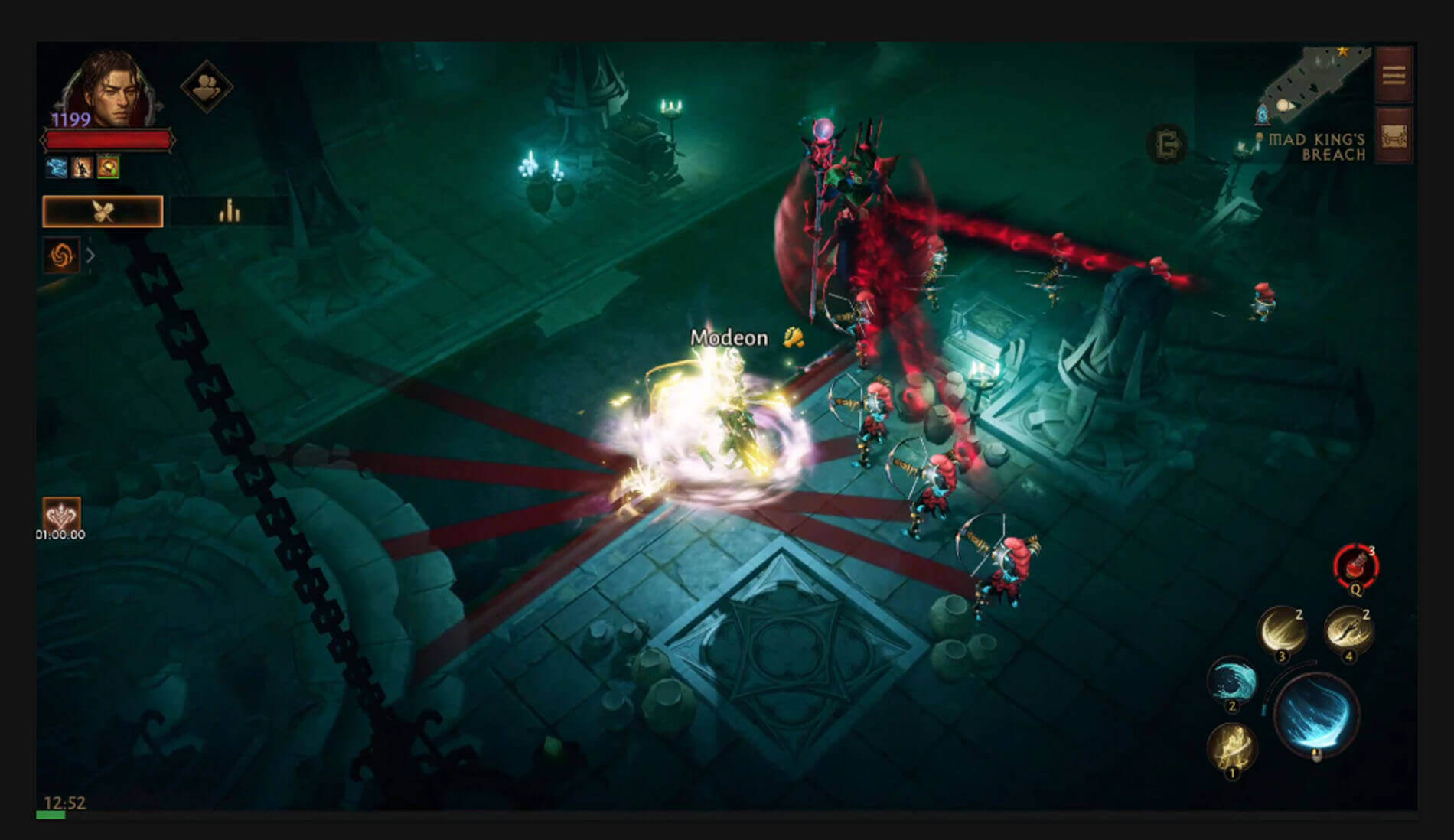
The Monster Commander transforms the dynamics of dungeon crawls at its very core. Previously, area of effect abilities and better equipment mostly helped to vanquish a bunch of foes. But the Commander adds a command structure component to the enemy troops. They drive players to interact with the placement and timing of the smaller enemies they typically overlook by gathering nearby foes into coordinated formations and timing their strikes. This design decision is a direct reaction to the demand for more strategic depth in endgame material. The player's normal habits are broken when known monsters all of a sudden act with goals, so brute force is temporarily put aside for strategic evaluation.
Two particular formations currently best illustrate this strategic need: the Shield Wall and the Ranged Volley. Before players can successfully strike the shielded core, they most likely need to identify a flaw in the defensive line, maybe by flanking or using piercing strikes. On the other hand, the Ranged Volley calls for quick movement and cover use to keep damage from being focused and intense from a distance. Every arrangement is a tiny fighting riddle meant to disrupt the habit of unthinking massacre by intentual design decisions. Good navigation of these events calls for quick adjustment of one's own abilities and posture to upset the existing coordination and sharp observation of the enemy's setup. This shift towards dynamic enemy behavior parallels design ideas found in other contemporary action RPGs aiming for longevity by means of intellectual challenge rather than mere number crunching.
Incentivizing Strategic Engagement
The way Blizzard uses the Monster Commander system is made even better by real, immediate rewards, which makes sure that players see these encounters not as annoying chores but as good chances. The promise of a Legendary item drop upon the first defeat of a Monster Commander each day is a great motivator to go out and overcome these fresh obstacles every day. Since this system links strategic success straight to player development, the time spent studying and conquering the Shield Wall or Ranged Volley is immediately lucrative. Moreover, the scaling of extra incentives according to encounter difficulty guarantees that mastering these sophisticated tactical situations remains a useful effort even after the first daily bonus is obtained. This tiered reward system supports the Commander's requested higher cognitive load.
A Step Towards a More Responsive Sanctuary
The Monster Commander fits inside a larger plan to make the world of Sanctuary feel more dangerous and responsive to player choices. This project is not a one-off; it builds on systems like Cursed Shrines and Corrupted Heroes, which add surprising or challenging aspects to regular gameplay loops. The aim is to stop the earth from being boring and therefore monotonous. The creators imply a dedication to making monsters act with more intelligence and coordination by adding an enemy type able to plan and carry out sophisticated moves. This development implies that future upgrades will keep expanding on this base, possibly adding Commanders using different monster families or even totally new, complicated formations to make sure that dungeon runs stay full of real, emerging dangers.
The Revival of Server Rivalry in Diablo Immortal's Bout of Realms
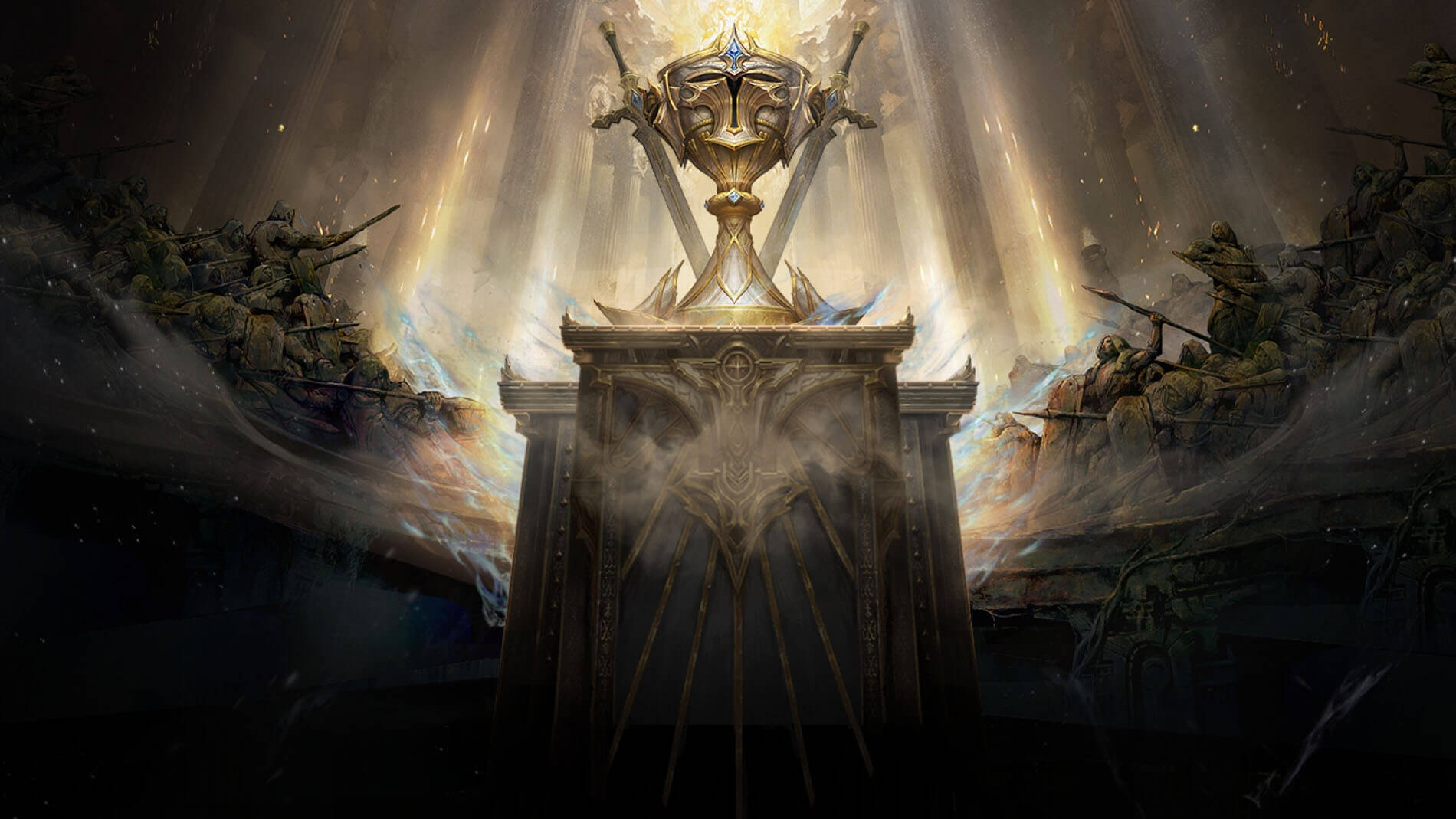
The announcement outlining the framework for the tournament, set to go from February 25th through March 15th, emphasizes a dedication to promote regular, intense PvP action. Unlike earlier cross-regional competitions, this iteration stresses strong intra-regional rivalry, with eight-person teams vying for the title of regional champions, therefore indicating a strategic change in Blizzard's approach to grow its competitive community.
The Structure of Server Based Conflict
The Bout of Realms is mostly based on server identification. The competition uses established community loyalties and rivalries by matching teams from one server against others on the same server cluster. Starting with a registration window from February 25 through March 1, the schedule is obviously separated. Teams need to settle their rosters and get their strategies ready in this first stage. After registering, the Ranked Matches phase, which lasts from March 2nd to March 6th, is the time when teams can get points and make sure they are seeded properly for the elimination rounds. Since early performance directly influences the later phases, this style calls for consistency.
March 9–15 sees the Elimination Bracket mark the tournament's peak. Although the general plan is similar to earlier Cross Server Bout of Realms events, the particular emphasis on intra-regional dominance gives it a unique flavor. Local power is celebrated as the best teams in a particular server cluster must beat their next-door rivals before moving on. Since the local player base is very personal about bragging rights, this concentrated intensity can sometimes produce more natural enthusiasm than would otherwise result from only cross-regional conflicts. From major, infrequent events to continuous, more regular testing grounds for a bigger number of would-be champions, the developers have said they want to create a continuous, more frequent competitive cycle.
Strategic Implications and Community Development
Mature esports development depends critically on the frequency advised by the developers. Skill development depends on consistent competitions that offer needed pace. Teams have clear, short-term goals to strive for, which inspires constant meta-analysis, class optimization, and team coordination activities. Repeated exposure to demanding situations hastens learning curves for a game like Diablo Immortal, where PvP effectiveness mostly depends on gear synergy and class composition. Knowing they will have another chance soon helps teams to see little setbacks less terrible and more educational.
This server-centred strategy enhances community links even if via competition. Often observing via streams or in game chat, the whole community becomes emotionally involved in the result when Server A's elite team meets Server B's best. This regional play produces better involvement levels than a broader cross-regional tournament might. The emphasis is on showing the combined strength and commitment of a single server community rather than only on personal ability. This approach effectively develops the foundation for competitive gaming: enthusiastic, identity-driven support groups.
Looking Beyond the Current Cycle
The announcement also suggests that future changes are coming, since after this Bout of Realms, a new kind of competition dependent on community needs will be launched. Long-term player retention in live service games depends on this reactivity. The popular team-based server dispute is confirmed by the ongoing competition, but the will to bring something fresh reveals an understanding that the competitive landscape has to change. Whether this new approach emphasizes 1v1 combat, many objective modalities, or maybe a different team size, the simple idea of innovation motivates the most committed players to be curious and involved.
Still, the current system offers a good baseline. It lets experienced participants hone current methods while it gives younger, committed teams a clear route to rise the ranks in their own server environment. Blizzard guarantees continuity by effectively returning this known, difficult framework, therefore laying the foundation for later growth of their PvP choices.
Tong-Shi’s Renewal Returns
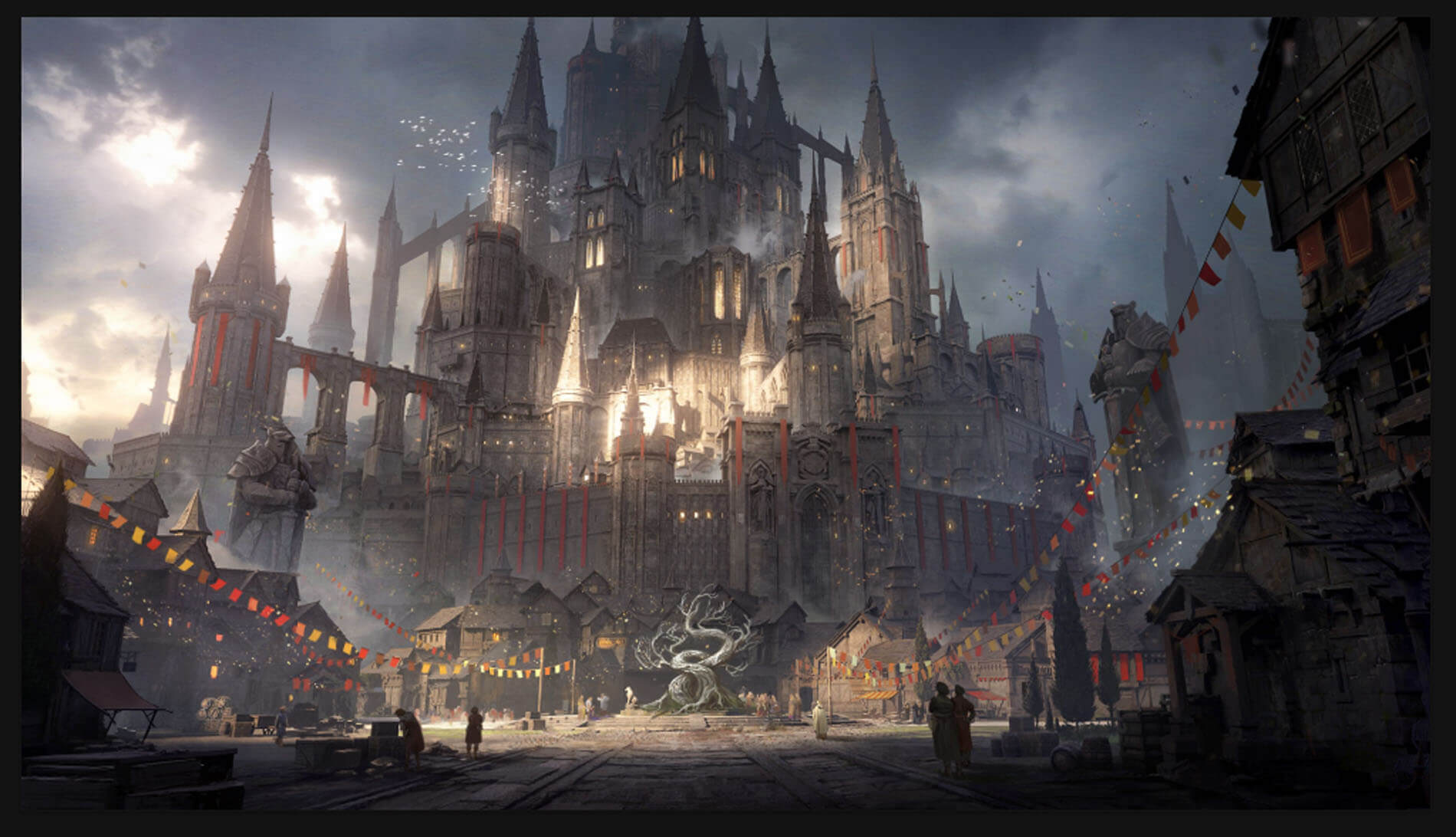
Through its seasonal events, Diablo Immortal, Blizzard Entertainment's mobile and PC action RPG, effectively uses such techniques. Of these, Tong-Shi's Renewal stands out as a noteworthy occasion meant not only for personal development but also firmly grounded in community giving and involvement. From February 4 through February 26 server time, this renewal combines daily chores, resource gathering, and the sharing of festive gifts to give players a clear path to get useful in-game goods while also building social links in Sanctuary. The core components of Tong-Shi's Renewal are investigated in this essay with a focus on the task completion system, the importance of the special currency, and the prominence of giving as the main event of the festival.
Daily Engagement and Task Structure
Daily player activity—arranged around the accomplishment of up to five daily particular chores—forms Tong-Shi's Renewal's basis. These activities involve players in several aspects of Diablo Immortal gameplay, therefore guaranteeing total participation in several modes. Running Dungeons, confronting Elder Rifts, killing elite monsters, finishing Bounties, and effectively beating the elusive Jingun are among the required activities. The event encourages active engagement over passive collecting by demanding that players engage in these different gameplay loops. Red Bags and Tseym are two of the priceless benefits that come from finishing these jobs. Although participants might try these chores multiple times, the system sets wise limits to keep equilibrium: during the course of the event, players are only permitted to earn 30 Red Bags and 100 Tseym per week. This weekly limit promotes consistent involvement across the three-week period as opposed to binge playing, hence guaranteeing a consistent stream of resources for the devoted player base.
The Currency of Celebration: Red Bags and Tseym
Red Bags and Tseym, the two main currencies produced from daily activities, have different but complementary functions in the event framework. Once earned, Tseym helps to fill personal reward pools, which means that when you contribute you can get random things like Gold, Scrap, Dust, or even a Random Legendary Item. This system offers task completion with some luck and quick financial reward. The Red Bags are the most socially focused aspect of the event, though. Red Bags are made specifically as gifts for friends or clan members to celebrate with. The mechanism encourages prosocial conduct; players earn rewards not only upon opening a Red Bag but also upon sending one. Sending Red Bags in numbers opens up tiered rewards, which include Normal Gems of your choice to Rare Crests. This gives you real benefits for the act of giving itself. Additionally, a free daily Red Bag claim via the login rewards tab gets around the weekly limits and encourages daily check-ins without penalizing players who might miss a day of task completion, particularly given that a quest system is there to make up for any missed login incentives.
Promoting Social Interdependence
Tong-Shi's Renewal becomes a group social activity from a simple resource grind thanks to the explicit encouragement to send and receive Red Bags. Maintaining strong community structures in the cutthroat MMO scene depends on systems that positively encourage gifting. The event encourages player interaction by tying useful progression tools like Crests needed for high-level gameplay to the act of sharing. A player who has a lot of work done can help a friend or Clan member who isn't as active. This makes sure that the game's economy and social structure reflect the renewal spirit, which is usually associated with good fortune and community well-being. Including Familiar usage to finish bounties for the renewal activities even simplifies the procedure even further so that players may use current resources to help with their civic responsibilities within the event framework.