New Season Called Forbidden Palate
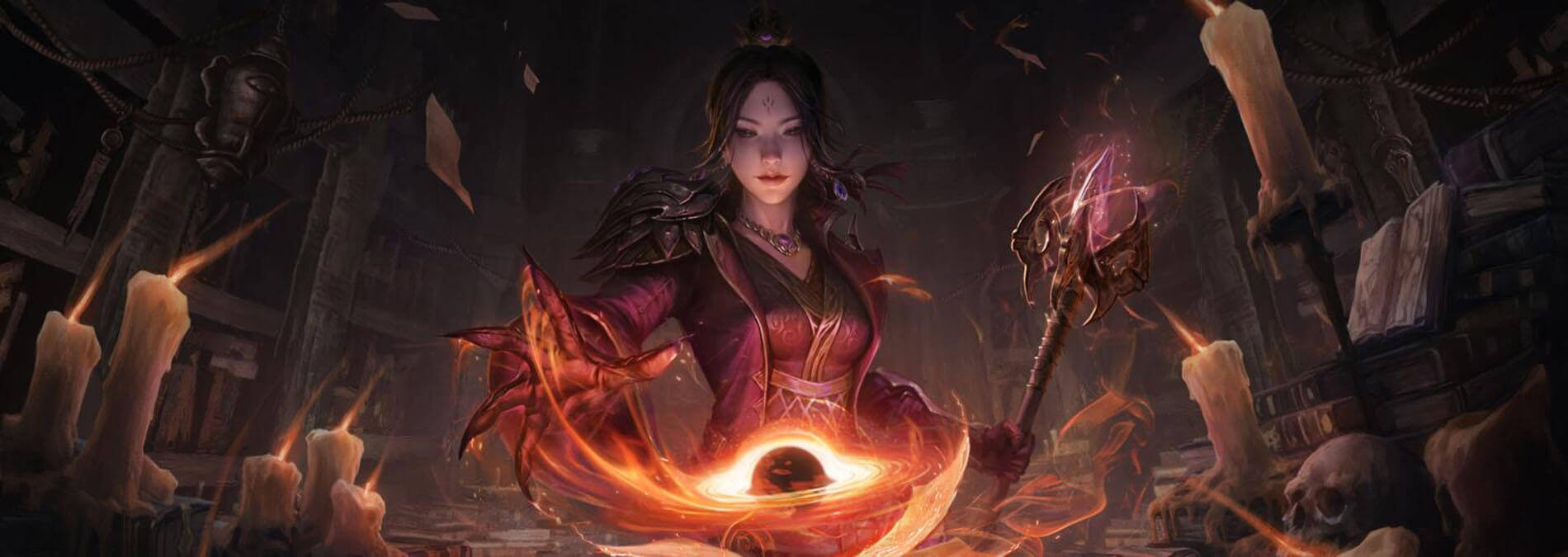
Those who indulge in their brethren’s flesh learn that there is no sweeter sin. Though you may try to resist, the spirit craves that which it has previously been denied.
The Season 46 Battle Pass boldly enters Sanctuary on November 20, at 3 a.m. server time, containing a Battle Pass with 40 ranks worth of rewards, such as Crests, hilts, Legendary Gems, and more.
Begin feasting on these desirable rewards by smashing monsters and rising through the ranks before your delicacy spoils and ends on December 17, at 3 a.m. server time.
The untamed lands of Sanctuary teem with dangerous creatures, from the Dark Wood to the Frozen Tundra. These blood-lusted creatures move with the land, and their animal perceptions are keen to recognize threats near their hovels and homes.
When fighting in Wild Zones, nearby monsters may detect the fighting and join in. If they notice your struggle and rise to quell the unknown presence, a horn will sound which alerts you to their presence.
Monsters will only be alerted to your presence after you attack one of them, so if you’re deep within enemy territory weigh your decisions wisely.
Sate your Forbidden Palate
The Forbidden Palate Battle Pass's promotional text right away sets a tone heavy in sin and forbidden knowledge: "Those who indulge in their brethren's flesh learn that there is no sweeter sin. Though you may try to resist, the spirit craves that which it has previously been denied. " This language moves beyond typical fantasy tropes of good versus evil, delving into the psychological and moral decay associated with ultimate power acquisition. In the Diablo universe, demonic power often comes at a steep spiritual cost. The "Forbidden Palate" metaphor likely symbolizes the allure of dark, forbidden power sources, perhaps tying into specific lore elements concerning demonic rituals or ancient, corrupted artifacts that players must briefly touch upon to gain strength.
In the setting of a free-to-play, live-service game, this thematic focus helps to serve a number of objectives. First, it generates instant urgency and exclusivity. The Battle Pass, which runs from November 20th to December 17th, provides a limited window in which to get the themed rewards, so compelling players into temporal scarcity. If not consumed within the allotted time, the "delicacy spoils" mirror the fleeting nature of seasonal allegiances or temporary power boosts. For the high school level player base, this taps into well-known ideas of limited-time deals and the fear of missing out, or FOMO—a strong driver in modern digital economy.
Thematic indulgence also fits the natural progression loop of role-playing games, in which players continually seek better gear and skills, sometimes at the expense of their character's moral standing or just by means of too much grinding. The Battle Pass capitalizes on this need for accelerated progress by providing 40 levels of useful resources including Crests, Hilts, and Legendary Gems. The "sin" is the money, whether real through the premium track's purchase or metaphorical through the time spent. The narrative cloaking softens the commercial element with dark fantasy flavour, therefore making the required expenditure of resources seem thematically appropriate within Sanctuary's bleak reality.
The Mechanics of Engagement: Rewarding the Grind

The Forbidden Palate and other Battle Pass's structural core is still the progression system connected to gameplay activity. Player’s advance across the 40 levels by killing monsters and finishing objectives across Sanctuary, hence directly motivating them to interact with the main activities of the game. The perceived worth of the time investment is directly related to the quality and number of the rewards. Legendary Gems, for example, are quite important for raising character power; hence, their presence in the reward track is a major draw for devoted gamers. The 30-day length of the season calls for a consistent level of daily involvement to optimize returns; this is a design technique refined in the mobile gaming industry to stabilize monthly active users. Players must include Diablo Immortal into their everyday routine, therefore transforming gameplay into a regular habit rather than a sporadic activity. While the paid track offers the great power advantages and cosmetic flair that drive revenue, the free track provides basic incentives to guarantee casual players feel rewarded. This dual-track approach is a hallmark of contemporary monetization; it offers scalable engagement that accommodates varying degrees of commitment and spending. The rewards mentioned—Crests for Elder Rifts, Hilts for the Horadric Legacy, and Gems—are the lifeblood of long-term character development and help to confirm the Battle Pass as a crucial, ongoing obstacle in the player path.
Wild Monsters Open World Zones Introduction

The addition of "Wild Monsters" in open-world areas, which impacts regions from the Dark Wood to the Frozen Tundra, is perhaps the most important mechanical change that comes with the Forbidden Palate Battle Pass. This makes resource collecting and exploration, which are usually predictable, very different.
Mechanisms of Detection and Alerts
The main mechanism presented here is one of increased environmental awareness among the creatures of Sanctuary. Previously, player combat was rather confined; drawing a big group of enemies typically only resulted in the death of those enemies. Now, the introduction of a sound cue; the sounding of a horn that alerts neighbouring monster groups to active conflict. This forces players to reevaluate their strategy in busy farming routes. If a player starts a fight, the following mayhem may bring more, possibly overwhelming, resistance. This shift adds a factor of tactical risk assessment into what was once a straight grind.
Strategic Consequences for Farming
For elite players depending on effective, continuous farming, the Wild Monster mechanic imposes a needed slowdown. A player must carefully consider the advantages of quickly clearing a dense pack against the risk of drawing three more packs whose combined threat could deplete valuable resources like potions or cause death, hence inducing pricey respawn times or repair bills. This mechanic actively discourages "mindless grinding" by demanding periodic situational awareness. As the prompt states, "If you're deep within enemy territory weigh your decisions wisely. " This encourages a more deliberate, perhaps slower path through the zones, so extending the time needed to achieve the same objective yield and so gently pushing for longer play sessions or maybe buying resources to offset the new risk.
This design decision captures a continuing problem in live-service games: how to keep repeated actions interesting without drastically compromising player-optimized established efficiencies. Diablo Immortal seeks to re-engage veterans who may have lapsed into predictable patterns of movement and combat execution by adding a dynamic danger. The horn is a mechanical representation of the world fighting back against the player's nonstop harvesting of its people.
Connecting Theme and Mechanics
The Wild Monster system can be thematically related to the "Forbidden Palate" idea. The monsters, who have keen animal senses, don't just sit there. They react to the player's actions, which the Battle Pass text says is linked to forbidden indulgence or power seeking. The "spirit craves" the forbidden, and the world reacts violently to that craving showing itself in a chaotic fight. The natural, albeit terrible, order of Sanctuary tries to contain or get rid of the disturbance that the player's quest for strength causes.
Immersion depends on this fusion of thematic presentation with game play. Rather than just slapping a black skin on a basic reward track, the creators have added a world mechanism that emphasizes the mood of constant danger and moral uncertainty hinted at by the title of the season. The risk of drawing too much attention reflects the risk of spiritual corruption connected with engaging in the forbidden.
Diablo Immortal's Economic Alchemy Event the Wind of Fortune

The Winds of Fortune event is essentially a time-limited stimulus package for resource collecting. Its primary mechanism is the activation of a 24-hour buff that doubles the drop rate of a number of important currencies and items. This brief doubling acts as a strong but fleeting accelerator for players aiming for rapid character enhancement. The activities impacted are wide ranging, covering almost every aspect of daily gameplay: Horadric Bestiary submissions, Challenge Rifts completions, Bounty runs, Fishing expeditions, Dungeon delves, Purge the Depths scavenging, Accursed Tower engagements, Hidden Lair explorations, and even general wilderness farming. This thorough application guarantees that participation in any preferred gameplay loop produces disproportionately higher rewards.
Core Resources: The Duplication
In Diablo Immortal, the very lifeblood of sustained progression are the particular things set aside for copying Gold, Experience, Battle Pass Points, Normal Gems, and Legendary Items. Gold powers basic maintenance and refinement. Experience directly translates to character level advancement and Paragon tree specialism. Legendary Items are vital for creating character builds and keeping competitive viability. Most importantly, Normal Gems are the foundation of gear improvement; they serve as the main barrier for equipment enhancement until extremely high levels. Doubling these goods means a player can accomplish in one day what usually takes two days of concentrated play.
However, to keep the game balanced and avoid full resource saturation, the event strategically introduces caps and limits. Most notably, the doubling of Normal Gems is constrained: only the first twelve Common Gems collected daily are tradeable; the total weekly limit for Battle Pass Points and Normal Gems remains unchanged. This indicates that the main advantage is faster account binding progression and faster acquisition of materials required for personal gear enhancement rather than a direct injection of tradable wealth
that might upset the Auction House economy. The design points to time savings rather than sheer financial inflation inside the player market.
The Importance of Event Timing and the 24-Hour Buff
The 24-hour buff's real-time activation mechanism forces players to think carefully about when to spend their time. If a player uses the buff at the beginning of a long gaming session, they get the most out of it. If the buff isn't used, it automatically turns on when the player logs back in the next time. This ensures that no one misses the chance to use it, but it also means that the player can't decide when to use it. This is because the buff makes the game move faster during the November 12–18 window, which is when the most people are playing. This is a key feature of successful limited-time events in live service games, as it makes the number of players online go up during the specified period.
The Winds of Fortune event is not a separate phenomenon; it is purposely put on top of the current Battle Pass structure, especially Battle Pass 46, which is called "Forbidden Palate. " The Battle Pass itself is a way to give people different kinds of rewards, with better rewards for people who pay. Progress is made mostly by earning Battle Pass Points.
The synergy here is clear: since Battle Pass Points are doubled during Winds of Fortune, players who actively participate during the event will progress through the Battle Pass tiers much faster than usual. This expedited tier advancement unlocks both free and premium goodies at a faster rate. For those who have bought the premium track, this higher velocity means they reach coveted cosmetic items, Legendary Crests, or other high tier rewards sooner. This makes the premium purchase seem like it has a lot of value right away.
However, the key discrepancy is that Battle Pass incentives themselves are clearly not doubled. This preserves the pace of the Battle Pass. If the points gained towards the Battle Pass were doubled and the prizes scaled accordingly, the whole reward cadence would be thrown off. The main reward from the event for Battle Pass progression is only time saved, as doubling the input (Points) while keeping the output (Rewards) consistent in quantity per level guarantees players reach the end faster but they still have to earn the individual rewards through the set tier structure.
Forbidden Palate's Setting:
Although the prompt only offers thematic background for Battle Pass 46, the term Forbidden Palate suggests a link to maybe darker or more obscure thematic elements within Sanctuary. In many Diablo expansions, thematic battle passes correspond with narrative shifts or the addition of fresh regional material, maybe related to rare, sought-after components or unique cosmetic sets. The Winds of Fortune event then rapidly equips players with the base level resources (Gems, Legendaries, Experience) needed to fully interact with any new, possibly difficult content introduced with the Forbidden Palate theme, therefore ensuring the player base is sufficiently powered up to meet the thematic challenges.
Resource doubling activities like Winds of Fortune show complex monetization and retention techniques typical in the mobile MMO scene. These events fulfill several psychological and financial needs.
In games where daily login streaks are very important, a big, resource-rich event acts as a strong incentive against burnout or migration to other titles. Players who might have taken a break are now driven to log in every day, or even spend entire days grinding, knowing that their efforts are yielding twice the return. This increased activity during the specified week greatly boosts the game operator's key performance indicators, hence demonstrating active user counts and consistent engagement levels.
Perceived Value and Future Monetization
Doubling the drop rate of free Gold and Experience temporarily increases the perceived value of non-purchased time. However, this brief generosity is offset by the long-term monetization plan. Players grow used to a faster pace during the event, therefore, once it ends, the return to the usual drop rate can feel comparatively slow, therefore gently motivating them to buy progression skips or resource packs sold separately from the Battle Pass to keep the freshly created accelerated speed. This produces a psychological baseline shift where the normal rate feels insufficient in comparison to the recent windfall.
A crucial control mechanism is limiting tradable Common Gems to the first twelve each day. The developers enable players to rapidly advance their power level without destroying the market for rare, player driven commodities by restricting the duplication benefit mostly to account bound progression (Experience, Character Specific Legendries’, Personal Gems for immediate use). This difference separates market manipulation from utility gain.
Call to Arms and Bout of Realms
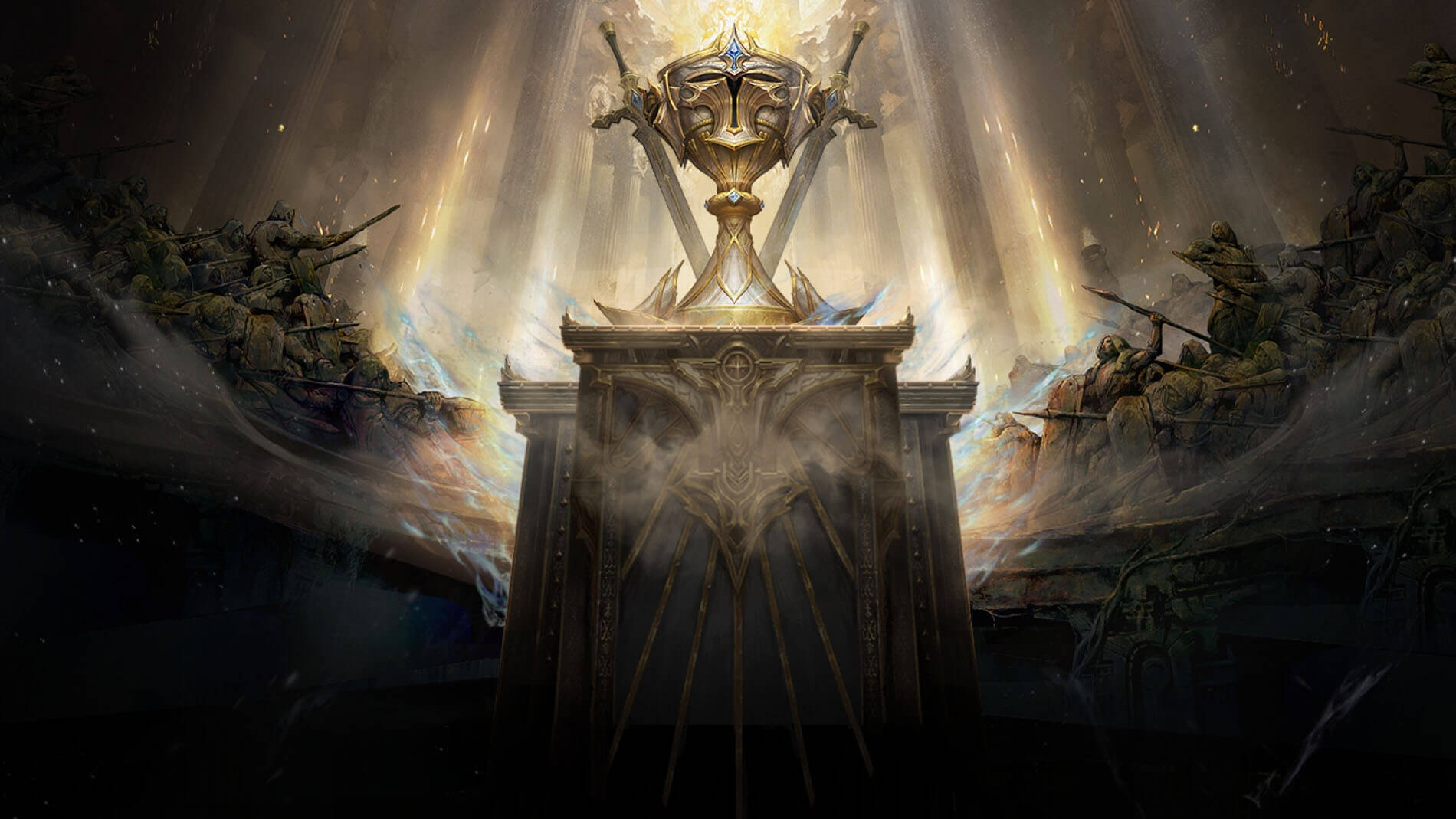
The Preliminaries of the Bout of Realms emphasize the ongoing need of player versus player (PvP) contests in Diablo Immortal. This structured tournament, meant to encourage elite rivalry, brings together the "bravest fighters of Sanctuary" to name one champion. Such activities are essential for the survival of any MMORPG since they offer high-level, aspirational goals that go beyond simple gear grinding. The very design of the Preliminaries calls for not just great character power, which can be gained by spending a lot of time or money, but also tactical skill in team composition and execution.
Though the Battle Pass itself usually compensates for progression through normal gameplay, the focus on high-tier PvP like the Bout of Realms sharpens the need for optimum builds and statistical superiority. Players aiming to do well in the Preliminaries will therefore naturally prioritize actions that provide the greatest equipment, resonance boosts, and gem improvements—many of which are directly supported by participation in seasonal events and the Battle Pass tracks. Thus, the call to keep the fight is a call to maximize every possible route for power enhancement.
Event Design and Resource Gathering: The Hedonist's Feast
Running from November 11th to December 10th, the "Hedonist's Feast" shows how developers typically motivate consistent daily and weekly participation: selected, returning limited-time events providing significant rewards. This feast metaphorically presents players with chosen pleasures from throughout Westmarch, each connected to a particular gameplay loop. The aim is to turn player time spent across different game types into real, high-value progression cash.
Examining Event Synergism for Development
The series of events listed—Survivor's Bane, Conqueror, Trial of the Hordes, and Fractured Plane—each aim at a different aspect of the Diablo Immortal gaming experience. Survivor's Bane and Conqueror usually emphasize survival or boss interaction, testing pure fighting skill and mechanical execution under stress. Trial of the Hordes usually tests sustained engagement against waves of foes, therefore rewarding perseverance. The Fractured Plane, on the other hand, provides a rogue-lite experience that stresses strategic decisions inside a single, difficult run.
The beauty of arranging these activities together is their synergy for the general Battle Pass progression. Players are not confined to one boring task; rather, they can rotate between modes that match their current objectives or personal tastes while yet gaining progress toward the Hedonist's Feast milestones. The rewards themselves—12 Legendary Items, 4 Set Items, 8 Aspirant's Keys—act as the meta-reward layer, motivating participation across all these current, distinct activities. Therefore, the Battle Pass 46 track acts as the meta-reward layer, encouraging engagement throughout the month-long window. The specific amounts of materials offered—12 Legendary Items, 4 Set Items, 8 Aspirant's Keys—represent a significant, time-gated injection of progress fuel meant to accelerate players who remain active during the month-long window.
Normal Gem Market Shifts: The Economic Tectonic Change
Beyond the initial competitive and engagement hooks, maybe the most influential aspect of the current update cycle is the next Normal Gem selling structure modification set for November 26, 2025. This apparently minor change has major consequences for the player-driven economy of the game, especially with regard to the worth and liquidity of lower-ranked Normal Gems (Ranks 2 through 5).
Presently, players may either manufacture or earn Rank 2–5 Normal Gems via gameplay and sell them on the in-game Market for Platinum, the premium currency utilized for high-level transactions. The upgrade aims to eliminate this channel. If a player tries to post a Rank 2–5 Normal Gem after the effective date, the system will automatically dismantle it into Rank 1 Gems before listing. Additionally, all current posts of Ranks 2–5 will expire and be removed from the Market at that time, therefore players must reclaim and re-list them, but now as Rank 1 Gems only. Vic in Westmarch, the resource merchant, will also get the ability to dismantle these higher-ranked Normal Gems into their Rank 1 components.
Implications for progression and value
This update drastically changes the supply and demand dynamics for Platinum acquisition through Normal Gems. Previously, players who gathered extra lower-ranked gems might turn them directly into a reliable source of Platinum, which they could then use to buy higher-ranked Legendary Gems or other important Market things. By forcing Ranks 2–5 into Rank 1 equivalency upon listing, the update greatly reduces the immediate Platinum return on these intermediate resources.
The immediate effect is twofold. First, it creates a brief window for players to capitalize on the remaining time to sell Ranks 2-5 gems at their current (higher) Platinum value before November 26th. Second, it forces future progression relying on the Market to rely almost entirely on Rank 1 Gems or higher-tier Legendary Gems. Rank 1 Gems, being the base unit, will likely see increased demand as players convert their dismantled stock. This move is a significant intervention by the developers, likely aimed at curbing market inflation or streamlining the acquisition of high-tier gem resonance, which is often perceived as a major barrier to endgame parity. By controlling the pathway to Platinum conversion through Normal Gems, developers exert greater influence over the pace at which players can bypass organic progression loops. This represents a decisive move toward centralized control over resource flow, shifting power away from speculative Market players and back towards direct in-game activity rewards.
Engagement's and the economy's interdependency
The whole of Battle Pass 46 period shows a well-planned mix of game design aspects. The competitive goal of the Bout of Realms requires a high-power level. Grinding resources during the Hedonist's Feast events, which provide the specific materials needed for character upgrades, can help players reach this power level. Finally, the upcoming Normal Gem market adjustment pushes players to think about the value of their current inventory in relation to the future economic situation. This might make them spend or hoard Platinum they got from normal means.
In this context, the Battle Pass is the main centre that confirms all of these activities. Whether a player is pushing in the Fractured Plane for rewards or grinding Survivor's Bane for event progress, the XP earned moves their Battle Pass track forward, giving them valuable items that go right into the competitive or economic optimization process. This layered structure makes sure that almost every meaningful action a player does in the game window helps them advance in some way, whether it's by getting cosmetic unlocks, direct power boosts, or strategic economic positioning. The message is clear: to be successful in Diablo Immortal, you need to be involved in all kinds of activities, from the intense, time-limited events to being aware of upcoming market rules. The fight to crown a champion is fought not just in the arenas of the Bout of Realms, but also in the hard work of clearing daily tasks and being smart about managing digital assets. The fight goes on because Blizzard Entertainment keeps the dynamic, changing ecosystem of Sanctuary's heroes going.
Bug Fixes to Improve Stability and Class Balance
The continued success of live service games like Diablo Immortal depends fundamentally on the responsiveness of the developers to community comments and the careful maintenance of game integrity. Patch 46, with its extensive list of bug fixes across gameplay and shop functionality, is a great example of this ongoing commitment. While big content additions usually grab player attention, the underlying stability given by thorough debugging is the foundation upon which fun gameplay is built. This particular update focused primarily on fixing long-standing problems affecting several character classes, so demonstrating a granular level of detail needed to preserve competitive balance and player trust.
Patch 46 mainly focused on fixing flaws in famous items unique to different classes. For the Monk, a bug where the Fate Alight legendary item didn't boost the damage of following skills as it should have. This bug made the Monk weaker because it messed up the order in which they were supposed to use their skills. Likewise, the Demon Hunter had a problem with the Fire Piper legendary, which made the traps it summoned not aggressive enough towards enemies nearby. In a fast-paced action role-playing game, this greatly lowered the class's effectiveness because it made the traps not go after enemies nearby.
Two different flaws linked to Druid items were fixed. One involved the Nyteflurry item, which was producing an abnormally high, unforeseen number of ravens, therefore affecting balance and probably leading to performance problems and unwanted power spikes. Another fix corrected the Blood and Mud item so that its critical hit chance effect ended too quickly. These fixes guarantee that the player experience matches the intended design power curve for these famous classes.
Perhaps the most extensive redesign centred on the recently introduced Blood Knight class. Often complex due to its reliance on stacking effects and timing, this class saw several fundamental problems smoothed out. The Mephitic Cloud duration failed to extend correctly when the Bloodsoaked Hood and Lianor's Misgivings items were used concurrently; this was fixed. Furthermore, the Bloodsoaked Hood's movement speed bonus was made consistent with its intended behaviour. Finally, the Crusader's Journey of the Faithful legendary item was fixed to properly trigger the Gloomguide's Prize set bonus, ensuring that gear sets function as an integrated system rather than siloed components. The interruption of mounted combat caused by the Crusader's Under Light's Gleam item was also corrected, restoring fluidity to travel between engagements.
Beyond gear particular to courses, the patch fixed fundamental advancement processes. For players using the Mourneskull legendary gem, the inability to upgrade it with Telluric Pearls was a major barrier to high-level character progression. By fixing this, the patch makes sure the upgrade path is always available and working, which is really important for keeping players interested in the game over a long time.
The stability of the in-game economy and the monetization platform was finally strengthened. The report points out a shop glitch whereby some packages could be bought without the player getting the associated goods. In contemporary gaming, where microtransactions account for a sizable portion of income, such transactional mistakes quickly degrade player confidence. Resolving these inconsistencies quickly is of utmost importance not just for player satisfaction but also for keeping the perceived fairness of the game's financial aspects. Patch 46, in essence, shows the developers' dedication to provide a polished and consistent experience by systematically correcting flaws pertaining to main class mechanics, legendary item functionality across several character archetypes, important gem upgrading pathways, and even shop transactional integrity, hence enhancing build dependability, restoring intended power scaling, and finally helping to create a more balanced ecosystem for all Diablo Immortal players