Diablo IV Community Concerns and Predictions
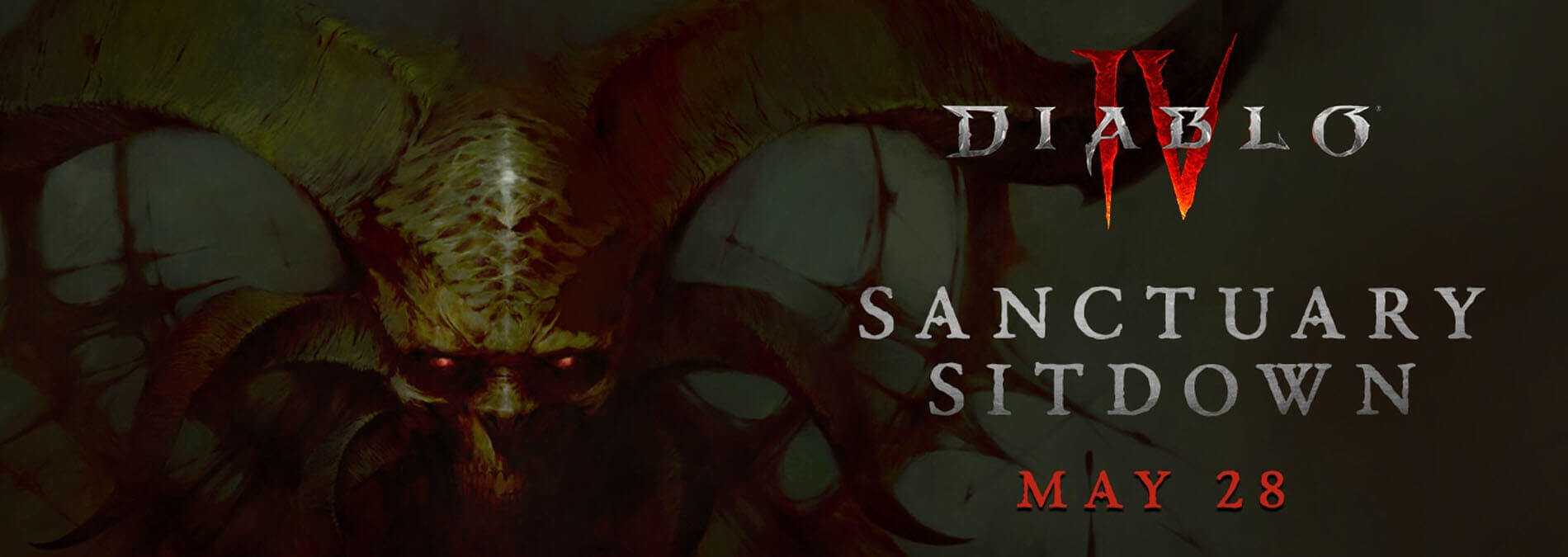
Diablo IV's terrain is ready for major changes, as the approaching Patch 3. 1 is creating a lot of buzz among its player community. The recent revelation of a developer Q&A event, the "Sanctuary Sitdown," set for May 28, 2026, ahead of the Public Test Realm (PTR) for Patch 3. 1, has heightened these expectations. For Blizzard Entertainment, this occasion is more than just another chance to promote something; it signifies a critical turning point for the game's destiny. Players view Patch 3. 1 as a possible turning point after a succession of experimental seasonal mechanics, controversial progression systems, developing endgame content, and ongoing debates about itemization and build variety. The worries of the neighbourhood go beyond simple balance modifications. they want to know what Blizzard's overall plan is for Diablo IV.
Slated to happen on the official Sanctuary Discord server on May 28, 2026, at 1 p. m. PDT, the Sanctuary Sitdown promises a more direct line of communication between developers and players. In contrast to earlier programs that frequently favored organized presentations, this Q&A session is presented as a community-centric discussion. By explicitly inviting players to submit "hot burning questions," Blizzard indicates a readiness to more clearly interact with the present game state and future features. Particularly remarkable is the timing of this occurrence. Diablo IV has gone past its initial release stage and has undergone significant changes, such as significant seasonal overhauls, expansion content, class rebalancing, improvements to itemization, and numerous iterations of its endgame. As a result, player expectations have changed dramatically since the first year of the game. The emphasis has changed from just "fixing" the game to knowing its long-term direction.
Anticipated Community Concerns and Predictions
The anxiety in the community about Patch 3. 1 is complicated and comes from several elements of the game's design and execution. Among the most noticeable worries is seasonal "borrowed power" systems. These mechanisms first introduced in earlier seasons have frequently given fleeting increases or unique features then eliminated or much changed with the beginning of a new season. Though meant to provide new gameplay experiences, this strategy has caused player weariness and a sense of less long-term investment in character growth. Many players hope that Patch 3. 1 will either improve these systems to seem more cohesive or give a more defined path forward for managing seasonal power.
Another common problem is endgame weariness. The current endgame activities become repetitive as players reach the highest levels, therefore lacking enough variety or meaningful advancement. Among the worries are the apparent futility of current endgame loops, such as the Nightmare Dungeon system, and a need for more difficult and gratifying content that inspires long-term commitment. Players are guessing that Patch 3. 1 could bring new endgame activities, maybe more difficult boss battles, an expanded Torment system, or possibly even a stronger focus on player versus player content. Still another major source of dispute is the current condition of loot. Players are getting annoyed with loot drops, especially low-rarity items and uninspired affix combinations. This is making them feel like their time isn't being used well and taking away the excitement of hunting for powerful gear. Many are hoping for a revamp of loot tables, the addition of more significant legendary and unique item affixes, or enhanced crafting techniques that give players greater freedom in obtaining desired equipment.
Still another source of ongoing argument is class balance. Although Blizzard frequently distributes balance fixes, some classes or particular builds inside classes might repeatedly underperform or dominate others. The community is expecting Patch 3. 1 to bring major changes that will increase build variety and make sure that all classes and playstyles are fun and effective. Predictions frequently entail extensive analysis of particular skill trees, legendary features, and one-of-a-kind items that might level the playing field for underrepresented archetypes with well-known meta builds. The "Sanctuary Sitdown" is anticipated to tackle these deep-seated worries by providing insights into Blizzard's approach to player agency, reward systems, and the general design concepts guiding Diablo IV's development.
For Diablo IV, the upcoming Patch 3. 1 and the related "Sanctuary Sitdown" are a critical juncture. Having spent a lot of time and effort on the game, the player base is looking for more than simply minor changes. They want a clear explanation of Blizzard's long-term strategy that deals with worries about seasonal mechanics, how long the game lasts, how loot is made, and how balanced the classes are. The success of Patch 3. 1 and the openness shown during the Sanctuary Sitdown might greatly affect player trust and the game's future path, possibly guiding Diablo IV towards a more strong and interesting experience for years to come.
The Biggest Community Questions into the Sanctuary Sitdown:
For the continuous evolution and community involvement of Diablo IV, the Sanctuary Sitdown event is absolutely essential. Several important concerns have surfaced as players have spent a lot of time and effort in the changing world of Sanctuary, therefore influencing the most pressing conversations inside the player community. These worries mostly centre on the viability of seasonal mechanics, the depth and diversity of endgame material, and the enhancement of loot and itemization systems. Effectively tackling these issues will be critical for Blizzard to keep players motivated and encourage long-term participation with the action RPG.
The Reworking of Seasonal “Borrowed Power” Systems
The seasonal borrowed power systems of Diablo IV are among the most important topics of discussion. Blizzard has added systems for several seasons that drastically change player power and gameplay patterns. Although at first seen as new and fascinating, a growing part of the community now finds aggravation with the fleeting character of these progression systems. The crux of this worry is the time and work spent on mechanics that reset or vanish at the close of every seasonal cycle. Often referred to as “borrowed power,” this repeating occurrence begs basic concerns regarding the game's protracted evolution. Players are desperately seeking answers as to whether future seasonal mechanics would be permanently implemented, if effective systems might be included into the Eternal Realm, and whether Blizzard aims to lessen the tiredness connected with regular seasonal resets. Often, seasonal gameplay today entails several levels of progression, distinct currencies, and transient features that disappear in a matter of months. Although this strategy has kept seasons different, many believe the game lacks enough permanent advancement outside of sporadic seasonal activities. Therefore, a major discussion during the Sanctuary Sitdown is the possibility of a redesign or a change in philosophy on these temporary power systems, as this directly affects player incentive and the perceived worth of in-game accomplishments.
Endgame Fatigue and the Need for Greater Variety
Although Diablo IV's endgame has greatly improved since its release, many players still find the fundamental gameplay loop growing tiresome after lengthy play sessions. The present endgame usually reduces to a familiar cycle of running The Pit, farming Helltides, grinding boss ladders, and optimising gear, all of which are repeated at growing difficulties. Even if a specific part of the player base relishes the difficulty of scaling material, there is an obvious need for more diversity and richness in endgame activities. One major criticism is the absence of really dynamic endgame experiences. Players are excited for patch 3. 1 to bring new top-tier encounters, multi-stage dungeons, raid-style mechanics, bigger world events, and more engaging seasonal activities. Moreover, more people are interested in Blizzard going even further into MMO-style mechanics. Many believe Diablo IV is organically developing into a hybrid of a classic action RPG and a live-service MMO as a result of the enlargement's introduction of bigger social systems and more world-based gameplay. Therefore, the Sanctuary Sitdown presents a chance for Blizzard to talk about these wishes and lay out a plan for a more varied and interesting endgame that appeals to a wider spectrum of player tastes and promotes ongoing participation.
Loot and Itemization Still Need More Refinement
Although players still think there is plenty of scope for major improvement, Blizzard has been praised for its improvements to itemization since the debut of Diablo IV. The current debate is mostly centred on producing irritations and the trustworthiness of object development. For example, there is argument over the tempering process. Although it enables complex item customization, many gamers voice unhappiness with the possibility of permanently harming great things through poor rolls. This has prompted calls for more effective reroll protection, better crafting systems, smarter loot targeting, less inventory clutter, and more deterministic progression path. The uniqueness of items also needs more attention to make sure they seem different and powerful. Among the most requested quality-of-life improvements are loot filters in particular. Higher difficulties can be overpowering because of the sheer volume of dropped gear, resulting in an abundance of what many consider to be pointless legendary items and a lack of really interesting drops. Therefore, at the Sanctuary Sitdown, Blizzard is anticipated to face significant inquiries on possible changes of crafting mechanisms and loot progression aiming to provide a more gratifying and less irritating looting experience.
Class Balance Remains a Constant Battlefield
The quest for balance among the different classes of Diablo IV has shown to be a never-ending struggle, an ongoing warzone where player demands and developer tweaks collide. Every seasonal update brings fresh meta builds, surprising synergies, and major power balance changes. Although some gamers appreciate the constantly changing meta, finding delight in adjusting to fresh dominating tactics, the community shows irritation. They believe that certain courses or particular builds grow too essential, therefore overshadowing weaker choices and lowering the attraction of varied playstyles. The contemporary discussion among the community often focuses on the tuning of particular classes. For example, questions are brought up regarding the Warlock's performance, the Sorcerer's survivability in demanding material, the Barbarian's scaling ability, the Rogue's burst damage potential, and the viability of summoner builds. Players often ask Blizzard to avoid making big changes to builds that are used a lot and choose a more subtle way of doing things instead. Many argue for more general buffs to underperforming classes and skills, hence encouraging more build variety and enabling a greater range of playstyles to thrive in the endgame. Moreover, players are deliberately looking for more viable endgame builds that provide unique strategic approaches. They want better synergy of skills that enables more complex and strong combinations; greater support for hybrid playstyles that combine various combat mechanics; more passive customization to more precisely shape characters; and a general vibe of more freedom in experimenting with builds. If Blizzard chooses to handle these concerns fully throughout several classes simultaneously, the forthcoming Patch 3. 1 has a great deal of potential to address these long-standing issues, perhaps representing one of the most significant class balance adjustments to date.
Players Want Clarity About Diablo IV’s Long-Term Future
Beyond the more immediate issues of gameplay mechanics and character strength, the Diablo IV community is progressively gazing toward the horizon in search of a better knowledge of the game's long-term vision. Many players want to know what Blizzard plans for the game's future development. Important issues centre on the frequency of expansion releases, the possibility for Diablo IV to embrace a more MMO-like architecture, and the presence of a clear long-term plan. Players are also interested to learn about the plans for bringing in future classes, whether new archetypes will be motivated by existing Diablo lore or whether totally new ideas will be investigated. Furthermore, there is a lot of curiosity about how seasonal mechanics could change over time, with conjecture about whether these transient systems would be added as permanent elements of the game in the future. The excitement about possible new courses is still really great. Many fans continue to express a strong desire for the return of holy-themed archetypes such as the Paladin or Crusader, classes that have a rich history within the Diablo franchise. On the other hand, several players are hopeful that Blizzard will add brand new class ideas, exploring fresh ground that has never been explored in Diablo before. Players will surely be closely examining any accessible data for subtle hints or clues illuminating the next major evolutionary advances for Diablo IV even if Blizzard avoids official announcements regarding expansion details during the Sanctuary Sitdown. This wish for foresight shows a community that cares about the game's future and how it might change and grow over time.
Sanctuary Sitdown Predictions for Patch 3. 1
The gaming community is visibly excited about Diablo IV's forthcoming Patch 3. 1. Although official information is still under wraps, obvious patterns and player comments provide strong clues as to the path Blizzard is probably going to follow. This patch is a pivotal moment for the game, as it has the potential to dramatically change how players experience it and resolve ongoing community issues. We can make educated guesses about the main parts of Patch 3. 1 by looking at how the game has changed over time and how Blizzard designs games. We'll focus on seasonal systems, expanding the endgame, crafting, build diversity, and the effects of a Public Test Realm (PTR) that is expected to be very large.
Seasonal Systems Evolving Towards Simplicity and Permanence
Players of Diablo IV are mostly weary of the overly sophisticated and fleeting seasonal progression mechanisms. The current version usually features a plethora of overlapping currencies and unique unlock paths that reset with every new season, so demanding a lot of time to regain well-known benefits. It is very likely that Patch 3. 1 will provide a more simplified process. This could show itself as simpler progression systems, fewer different seasonal currencies, and more focus on account-wide unlocks that carry over across seasons. Moreover, the interaction between seasonal and Eternal material is projected to increase, so reducing the abruptness of the changeover between them. A change to more permanent progression components would directly solve a significant source of irritation for players, promoting a feeling of ongoing growth rather than repetitive cycles.
Endgame Expansion Over Replacement
Blizzard is more likely to build upon the current framework rather than replace current endgame activities entirely with new content. Rather than removing well-liked events like The Pit or Helltides, Patch 3. 1 is expected to add more layers and challenges to the current endgame ecosystem. Among possible additions are rotating challenge activities providing new goals, dynamic World Tier events adding unpredictability into the open world, and improved cooperative systems to boost group play. The inclusion of time-limited challenge dungeons and multi-boss gauntlets would additionally evaluate player ability and coordination. Moreover, the notion of seasonal world invasions may introduce a repeating danger needing group player effort. This strategy fits with Diablo IV's continuous shift toward more large-scale, shared-world gameplay and builds a more diverse and richer endgame experience.
Crafting Changes as a Necessity
Particularly with Tempering and Masterworking, Diablo IV's crafting system has caused a lot of annoyance that has lately been a major topic of discussion among the community. The current system can be punishing since there is a significant chance of "bricking" useful objects or depleting limited resources. Patch 3. 1 is virtually certain to bring significant improvements to solve these problems. Players can look forward to the introduction of partial reroll protection, systems for Temper recovery, and more accurate targeting of preferred affixes. The general objective will be to lower the chance of failed crafting tries and increase the pleasure and less arbitrary nature of the process. Knowing that their investment of time and resources is more likely to produce positive outcomes would help players approach the crafting system more boldly.
Fostering Greater Build Diversity
Blizzard has been pushing for more inventive and hybrid character builds in recent Diablo IV updates, which is a clear design trend. Patch 3. 1 is anticipated to maintain this trend by adding features increasing player control over character customization. This might include new legendary item interactions that produce fresh synergies, expanded passive skill systems providing more subtle options, and extra class specific skills that unlock unexplored playstyles. More build-defining unique items and sophisticated skill augmentation systems would further enable players to stray from meta setups and try with offbeat combinations. The aim is to give players more options for creating strong characters, increasing the game's replayability and catering to a wider range of tastes.
The Significance of an Extensive PTR
Blizzard's choice to hold a special "Sanctuary Sitdown" event before the Patch 3. 1 PTR strongly points to this update including more than just regular balance adjustments. The degree of excitement for this PTR points to major methodical changes, significant modifications to progression systems, and substantial class rebalancing. It also shows a readiness to explore endgame systems and perhaps carry out contentious mechanical changes. Serving as a testing ground for changes that could influence the next big chapter of Diablo IV and provide insight into its future path, this PTR might be among the most influential in Diablo IV's history.
The Diablo IV community's most passionate wish is for the game to reach greater depth without becoming an exhausting chore. Though Diablo IV has undergone notable changes since its release, including improved combat, better itemization, and more powerful endgame systems, the focus has to change to significant long-term growth, rewarding loot, less grind weariness, and more build flexibility. Heralded by the impending Sanctuary Sitdown and a thorough PTR, Patch 3. 1 provides Blizzard with a crucial chance to show its awareness of the game's present strengths and areas needing development. Successfully meeting even some of the community's fundamental needs will undeniably make Patch 3. 1 one of the most important updates in Diablo IV's continuous development, perhaps re-engaging players and strengthening the game's long-term appeal.