Blizzard Quote [source]
The next next chapter in Sanctuary's epic saga has been unveiled. Summon your sickles, put on your pointy hood, and get ready for Happy Reaper™ —the definitive Diablo experience coming soon to web and mobile!
What is Happy Reaper?
In Happy Reaper, players take on the role of Malthael, the Angel of Death, who's recently returned to Sanctuary with a vengeance. With a series of well-timed mouse clicks or finger taps, you'll skillfully guide Malthael through a network of ancient Pandemonium ruins to collect human souls and obliterate all puny nephalem with your trusty Death Laser of Doom™.
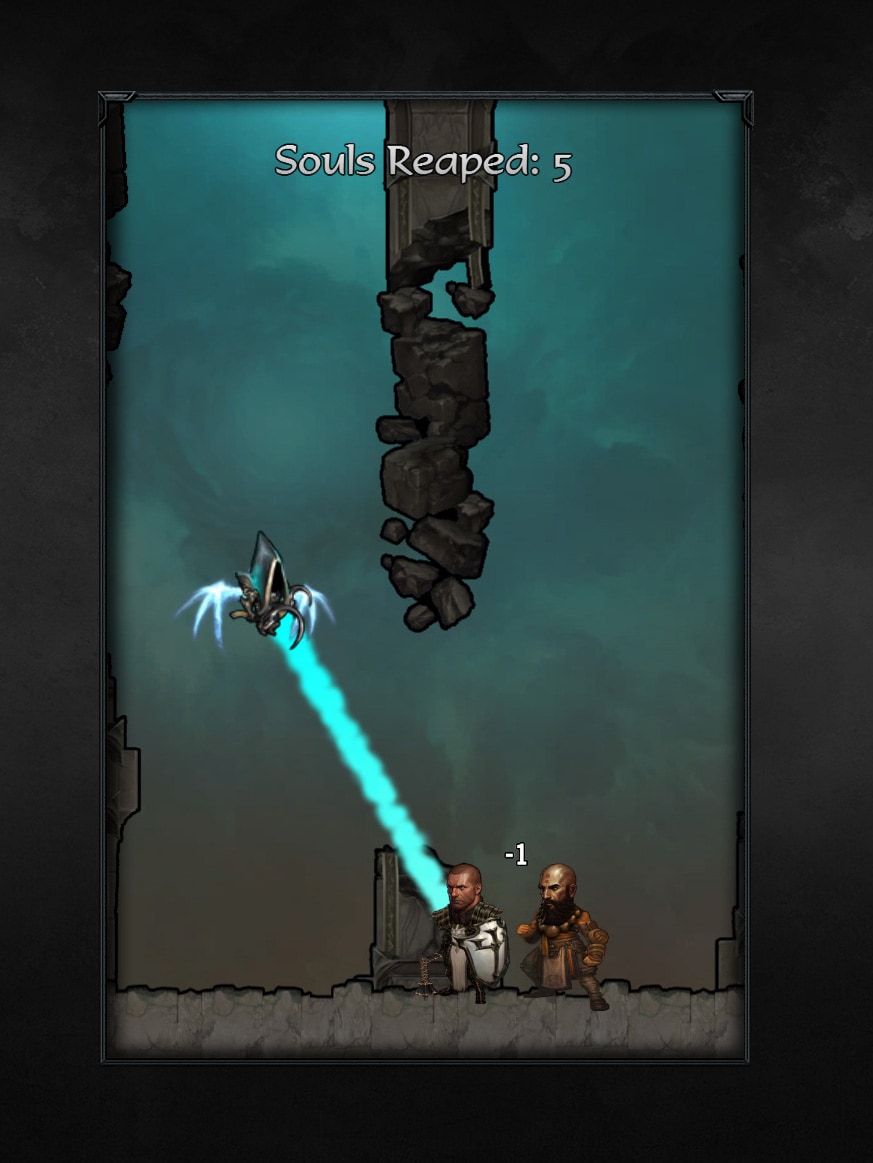
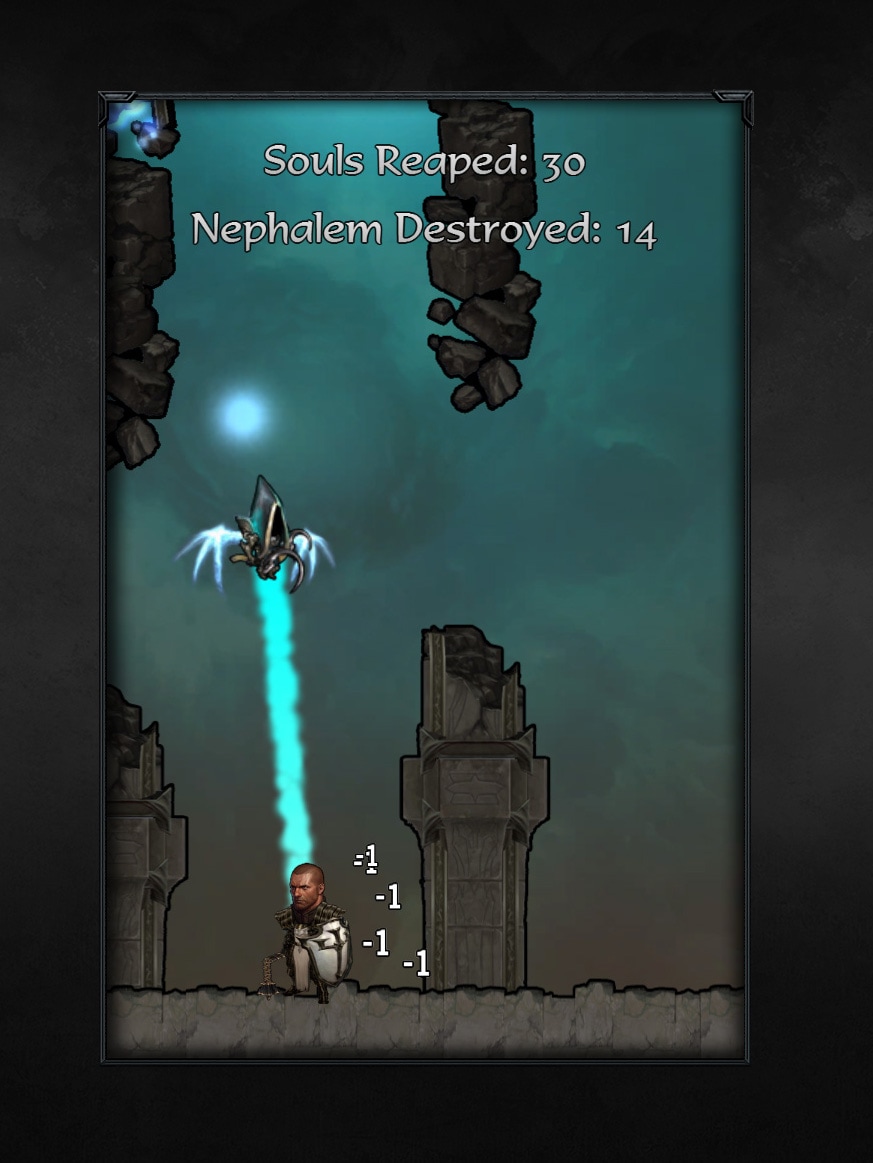
Easy, right? WRONG. Happy Reaper is probably the most challenging Blizzard game you've ever played. It's incredibly difficult to learn and almost impossible to master!
Feature Highlights:
- Robust, interactive storytelling allows every choice to matter in Happy Reaper. Will Malthael ascend to victory or fall into oblivion? Only you decide!
- New Tapright™ technology captures your clicks and taps better than ever, offering unparalleled responsiveness and absolutely no scapegoat for your imminent failure.
- An all-new, fully loaded soundscape stimulates your senses and helps you reduce stress, improve sleep, and lose weight *.
- Experience the WHOOSH of every ghostly wing flap and the POW of every laser beam blast with our proprietary Dia-Bling™ FX engine.
- Larger-than-life in-game collision system provides exceptional (and increasingly difficult) levels of challenge.
Bursting with rich gameplay depth, hidden difficulty modes, and the most spectacular end-game content we've ever seen **, Happy Reaper offers limitless hours of frustration enjoyment for any aspiring harbinger of death.
Can't wait to get your hands on Happy Reaper? (Who said patience was a virtue?) Test your mettle RIGHT HERE on our website with an exclusive first look of the in-browser client.
Also, be sure to stay tuned to diablo3.com for additional details about Happy Reaper including upcoming beta tests, supported browsers and mobile devices, release date and pre-order opportunities, and much more. In the meantime, happy reaping!
*These statements have not been evaluated by the Food and Drug Administration.
**Or at least that we're told. We haven’t actually made it past pillar #4. Let us know how it goes!
Blizzard Quote [source]
I do hope you have been making the best of your time, nephalem, because the sands in your hourglass have run out. The time has come for my master to sweep clean the streets of Westmarch, and your feeble efforts will mean little against our inevitable tide.
Today marks the arrival of Reaper of Souls™, and though there is much to explore and possibly aid you on your futile quest, I expect you to achieve little more than a swift and painful demise.
Fresh Blood
- The Crusader -
Taking on Death himself requires more than flashy spells, endless ammunition, and brute strength. If you are not confident in your current skills, perhaps you should look at other endeavors. Though I doubt the layers of armor and power of your feeble Light will stand against my blade, it is, perhaps, a good place to start.
The Crusader is the latest nephalem to challenge my lord. If you feel up to the task, you may consider taking up a flail and shield. But be advised—the path of the Crusader is a demanding one, and plotting out your skills and learning as much as possible about your Order would be wise. Catching you unawares would make my job far too easy.
Welcome to Death's Lair
- Exploring Act V -
The siege has already begun, and you, my dear heroes, are late to the party. Challenge my brothers and sisters in Westmarch if you dare, but be aware—we will not fall easily.
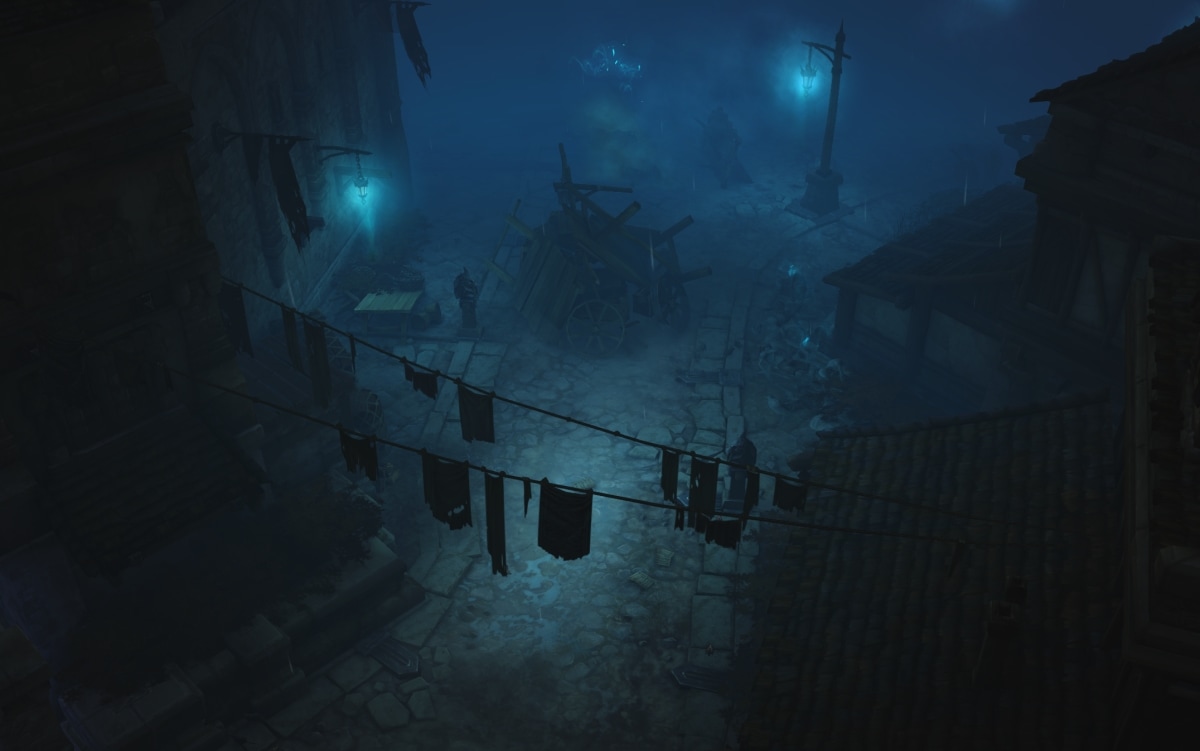
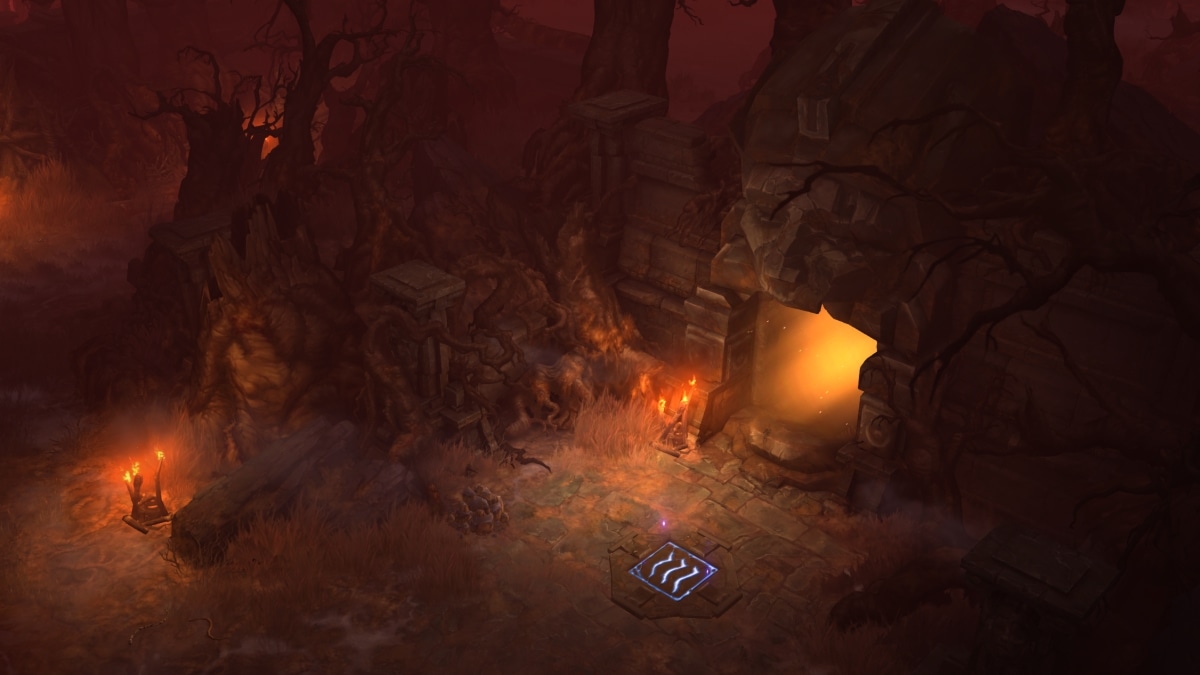

Doubtful as your success may be, Malthael lies far beyond the city's walls and you will have to traverse the deadly Blood Marsh before catching even a glimpse of possible victory. If it comes to pass that you find yourself face to face with my master on forgotten and distant battlefields, well… I wish you the best of luck. You will need it.
Train Up
- Beyond Level 60 -
Fortunately for you, it seems the time has come to shed your current constraints and grow further in power. Though it matters not, reaching the exalted 70th level of experience offers powers beyond your wildest imaginations. New skills are available for each brave warrior who rises to the challenge, and I dare say these impressive feats might provide a smidgen of advantage.


But do not take my word alone, as you may wish to try Avalanche, Vengeance, Epiphany, Piranhas, and Black Hole for yourselves. I wholeheartedly advise becoming intimately familiar with these skills before employing them—I do not require further reason to regard you as fools.
Beyond Death’s Grasp
- Adventure Mode -
Hypothetically speaking, let us imagine for a moment you surpass all odds and save the world. What is a hero who has defeated the embodiment of Death to do? An infinite wealth of challenges lie beyond my master's defeat, should you prove worthy. That traitorous Tyrael might have the odd job or two for you, and ancient tales speak of challenges meant only for the most powerful of nephalem.
Of course, that would not be you, so I would not concern yourselves with such hearsay.
Get All the Help You Can Get
- The Mystic -
It is unavoidable that you will struggle along your journey. Somehow, fate has looked kindly upon your unfortunate soul and guided the powerful Mystic to cross your path. Myriam is a stubborn ant who will not be stomped, despite my best efforts. Find her, and she may be grateful enough to enchant your equipment with more powerful abilities.
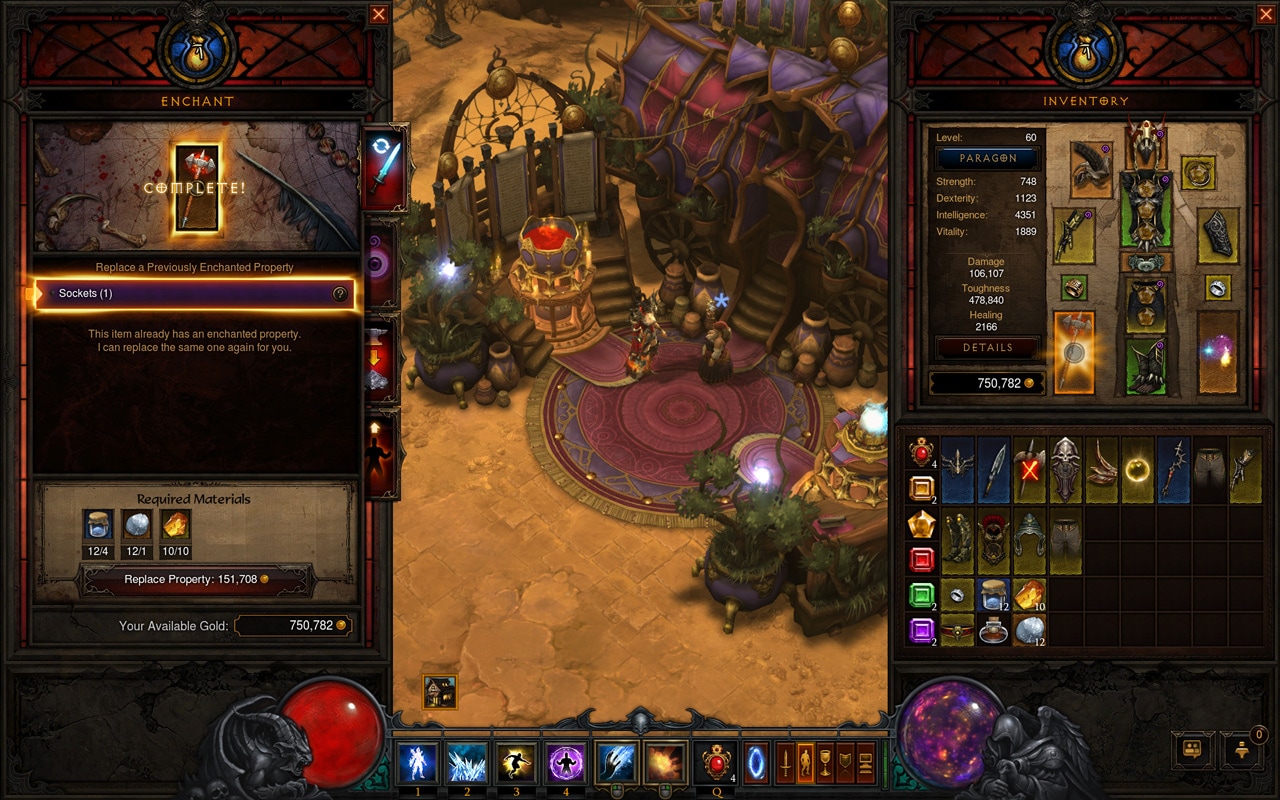
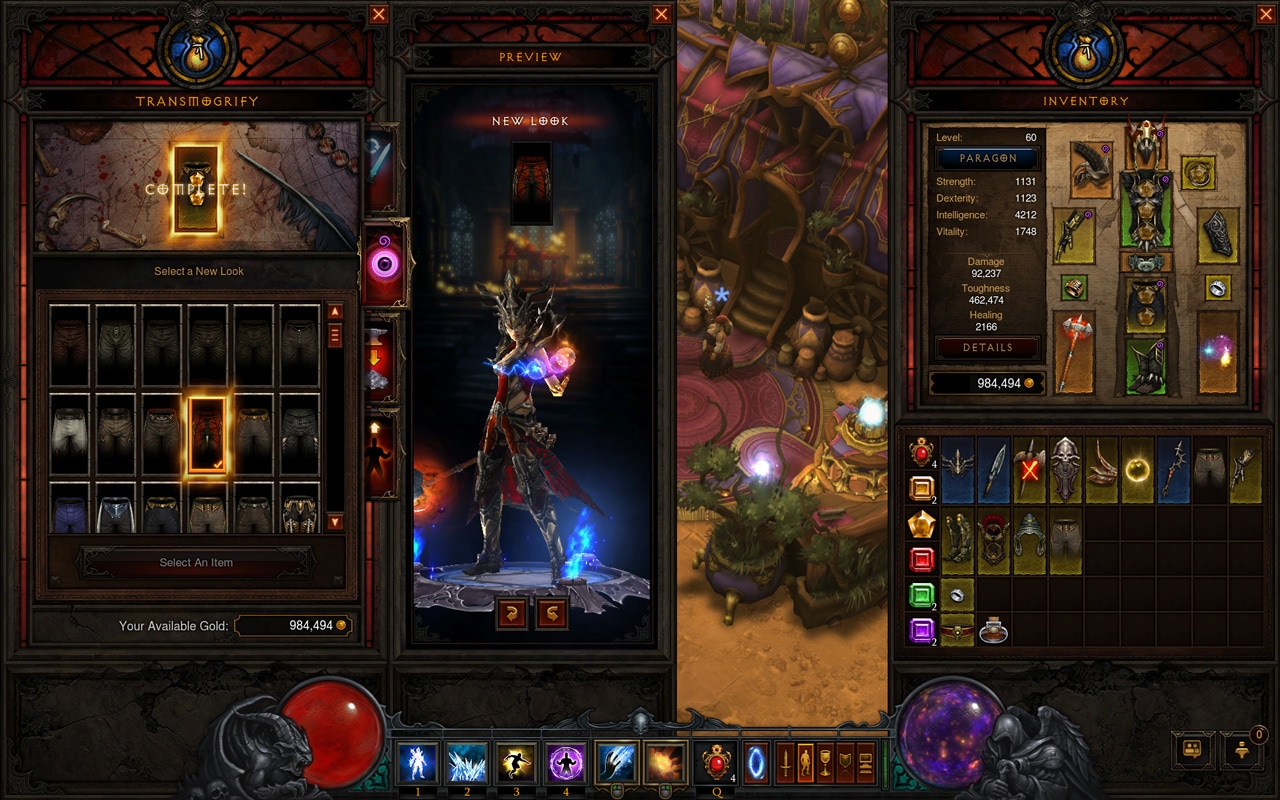
Of course, arrogant nephalem like you may find little need for more power, and instead may partake in frivolities such as ensuring your boots match your shoulder pads. Luckily, the Mystic will humor you in such ridiculous endeavors... for the appropriate coin.
No One Can Stop Death
- But You’re Welcome to Try -
I do hope my insights have proven helpful, adventurers. Whilst it is fated we meet one another on the battlefield, understand that my advice comes not from a place of good will. You are, after all, standing in opposition to my dear Angel of Death, and I am nothing if not a devoted servant.
Fare thee well, nephalem. I look forward to claiming your soul.
More details will be added as they come, was just announced at the Reaper of Souls launch party.
A tiered rift system that becomes increasingly difficult as you advance. An "endless dungeon" of sorts.
- Chance at receiving a "greater rift key" when completing a normal rift.
- Finishing a greater rift unlocks an even harder rift. Clearing that rift unlocks another, so on and so on.
- Play and complete harder and harder rifts until you fail.
- Your progress will be ranked on a leader board
Josh Mosqueira has just confirmed a ladder mode will be coming to Diablo 3. This happened during the Reaper of Souls launch party Twitch stream. For those of you not familiar with ladders from Diablo 2, they are a competitive mode where players start from scratch and race to be the highest level player in the quickest amount of time. Details on how ladders work in Diablo 3 will be added as we get them.
Blizzard Quote [source]
- Coming first major content patch. (Couple of months from now)
- Ladder like "seasons"
- Still being worked on, date not yet announced.
Blizzard Quote [source]
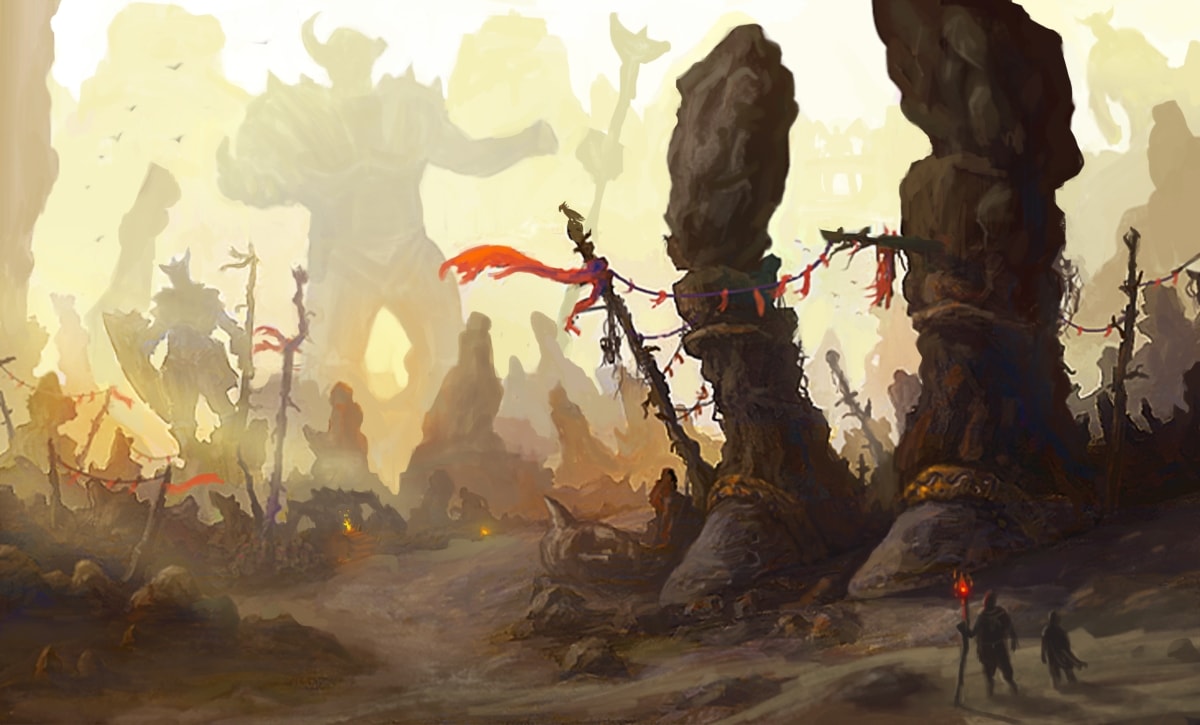
The last vestiges of an endless battle echo across the decimated terrain of an ancient crossroads. Once the epicenter of the Eternal Conflict, the war-torn fields that stretch before you now are eerily silent, save for the occasional scuffle of straggling soldiers and primordial scavengers that have made the best of this inhospitable expanse.
An abandoned fortress looms chillingly in the distance. Previously an outpost that stood as the last bastion of the Light before the Gates of the Burning Hells, it now houses a threat unlike any before.
Welcome to Pandemonium.
The Epitome of Endless Strife
Pandemonium is the scar of creation's birth, where angels and demons once fought fervently over control of the Worldstone. An ancient artifact with the power to shape reality, ownership of the Worldstone changed hands for eons—the High Heavens and Burning Hells trading blows, creating worlds, and then watching their inherently flawed creations wither away over and over again.
Those who are familiar with the events of the Sin War know that the renegade angel Inarius, along with the daughter of Mephisto, Lilith, stole away with the Worldstone, creating the world we now know as Sanctuary. With the artifact well hidden in this refuge, the battles in Pandemonium slowed over time and, eventually, ground to a halt.

Inarius and Lilith by Ziom05
Players will soon have the opportunity to revisit the estranged combat zone, but those who have previously walked the halls of Pandemonium Fortress will find it an entirely new experience. The battlefields have never before been traversed by Sanctuary's heroes, and though Pandemonium Fortress was once the base of operations in Act IV of Diablo II, the nephalem arriving now will find it much less hospitable.
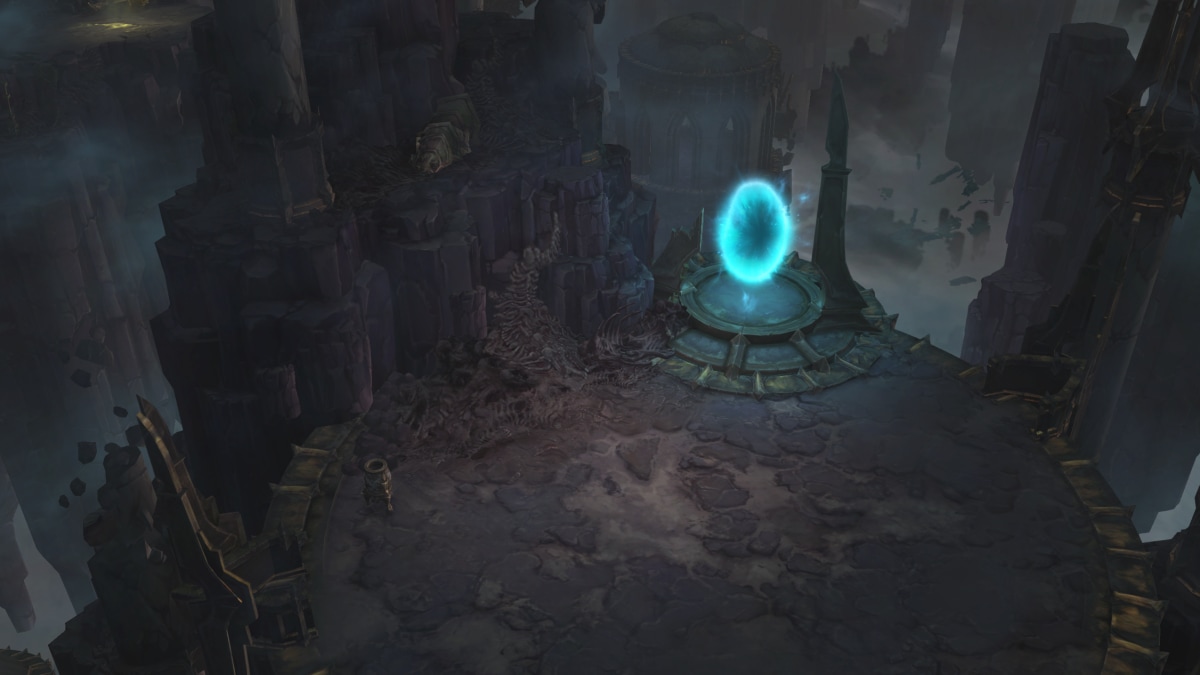
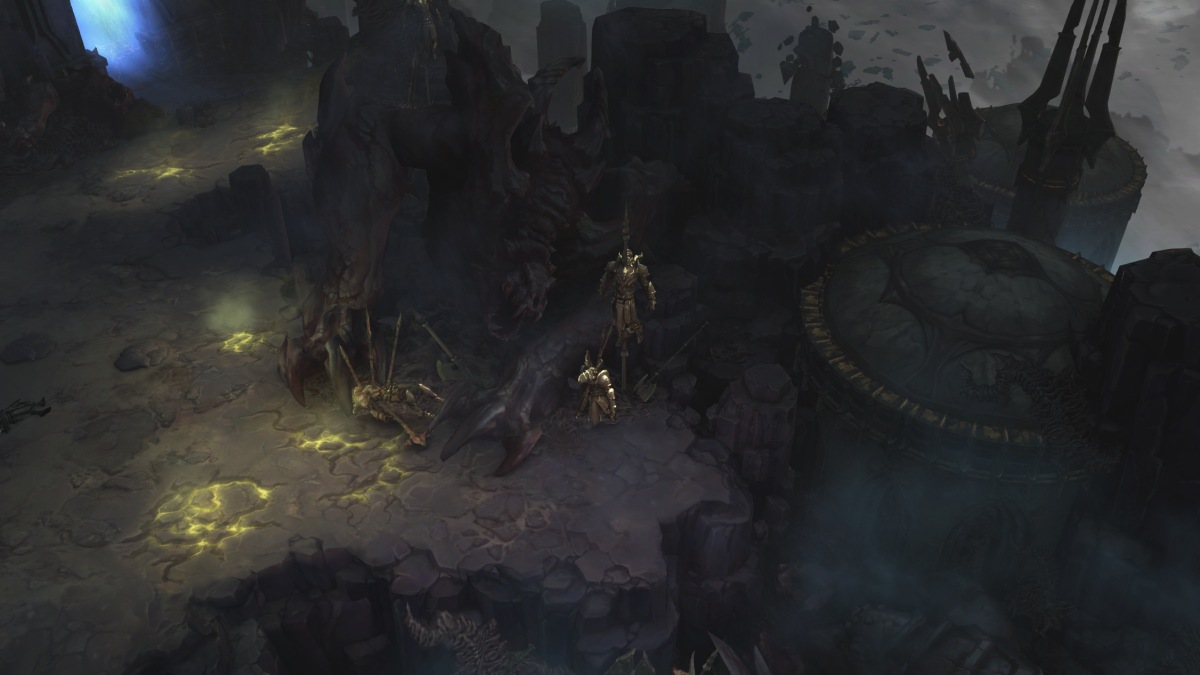
Originally constructed by Tyrael to house and protect the Worldstone, one of the unique properties of the Pandemonium Fortress is that the structure takes on the appearance of those who control it. Though it's been conquered and reclaimed through the ages, without the ultimate prize that once lay within, the interest from both angels and demons in holding this keep has severely waned. However, such disinterest does prime the location for hiding away another artifact with the power to tip the scales in the Eternal Conflict forever.
Re-Imagining the Battlefield
Pandemonium has long been a locale our designers and writers have wished to explore to the fullest, and the previous excursion in Diablo II barely scratched the surface of what this realm has to offer. The concept of a nexus between the High Heavens and Burning Hells is a compelling one, but capturing the desired other-worldly feel without extending so far into the unknown as to be alien was a great challenge.
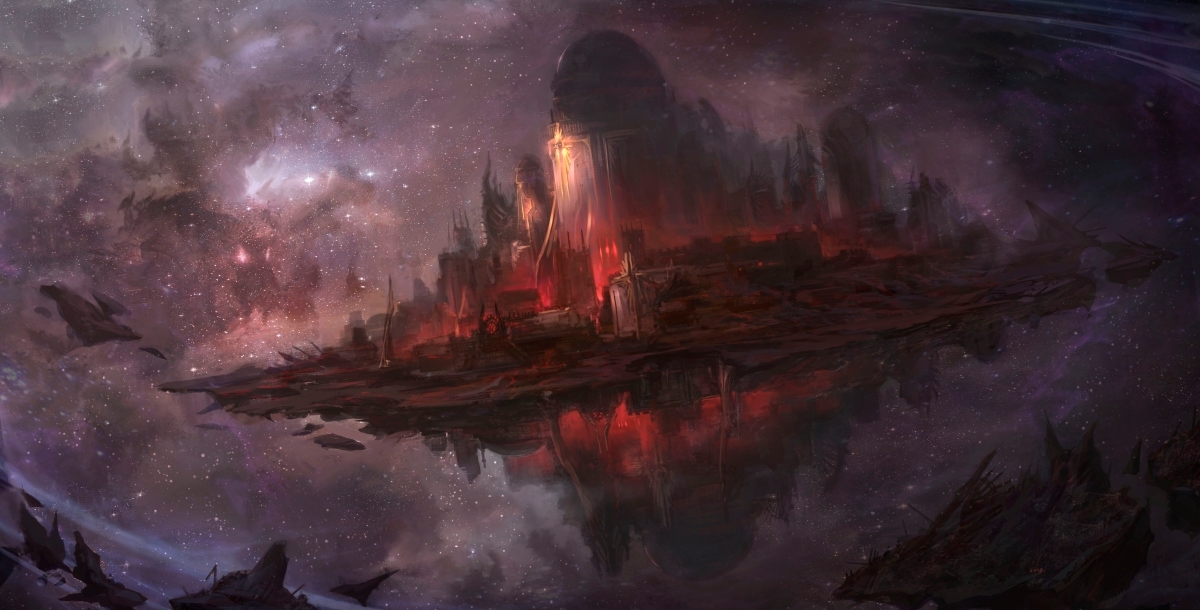
As Pandemonium was barely touched upon, there was a lot of room to draw outside inspiration. Everyone on the design and development team as well as any player who played Diablo II has an idea of what Pandemonium could be, and the idea of infinite possibilities remained strong among these concepts. This meant the best bet for fulfilling the fantasy of this location was to take all those ideas, mesh them together, and boil the resulting amalgamation down into a unified vision that makes you stop in your tracks and say, "Yes. That's Pandemonium."
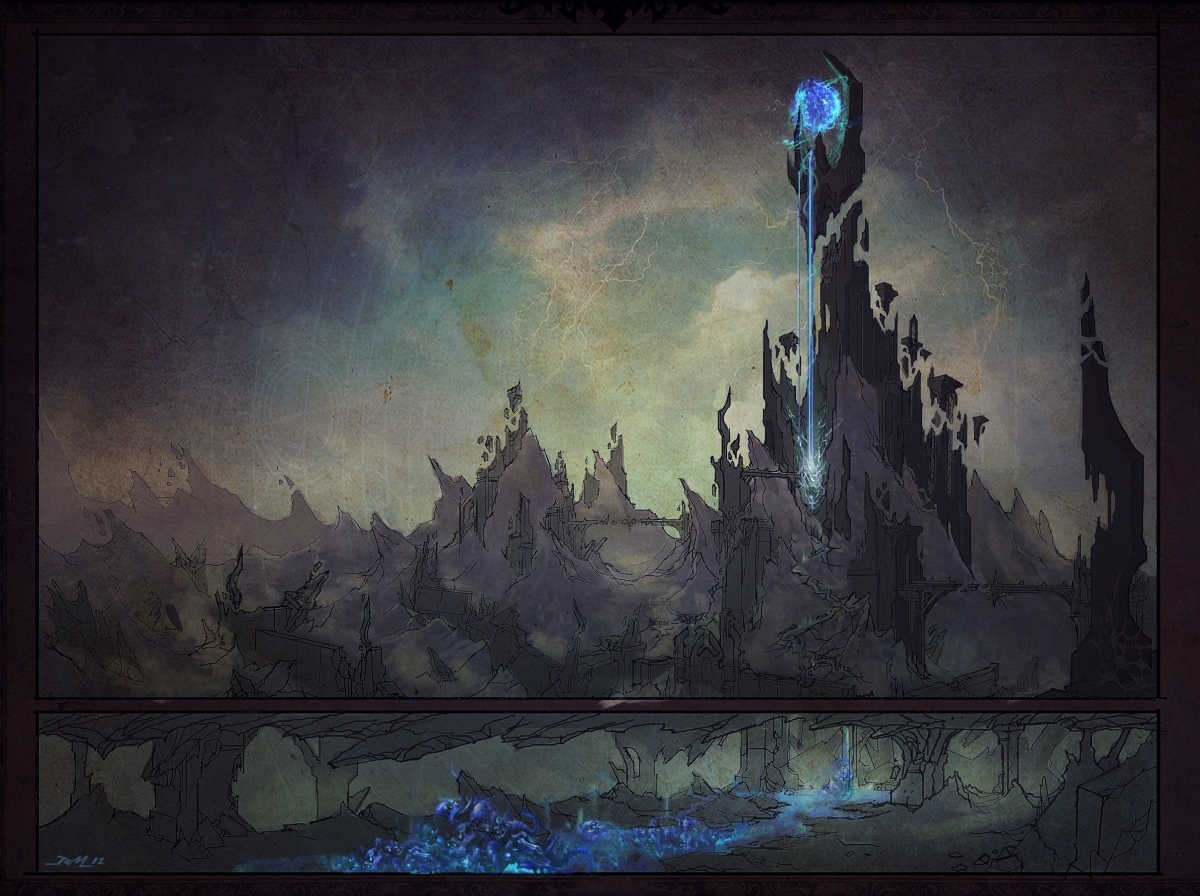
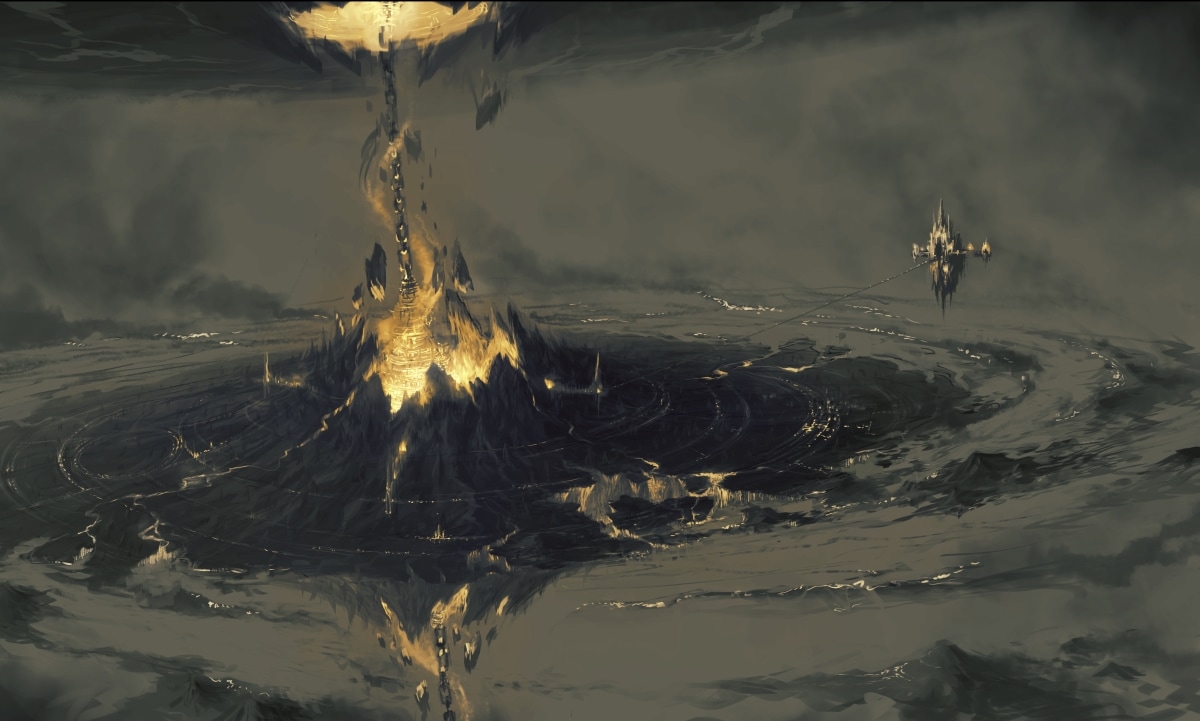
Of course, it was important to make sure this zone felt like nothing else ever explored in Sanctuary, since it’s a place that the nephalem should find unfamiliar. It's a place where angels and demons have battled for eternity and so presented the question of what that would look like. What kind of inhabitants would remain in this land? Scavengers that live off the battlefield remnants, forgotten angels and demons that continue to fight forever, and unique creatures like the Realm Walker, an ancient beast burdened with the portal to an eternal prison, all resulted from these explorations in design.
Pushing Boundaries – Encompassing Eternity
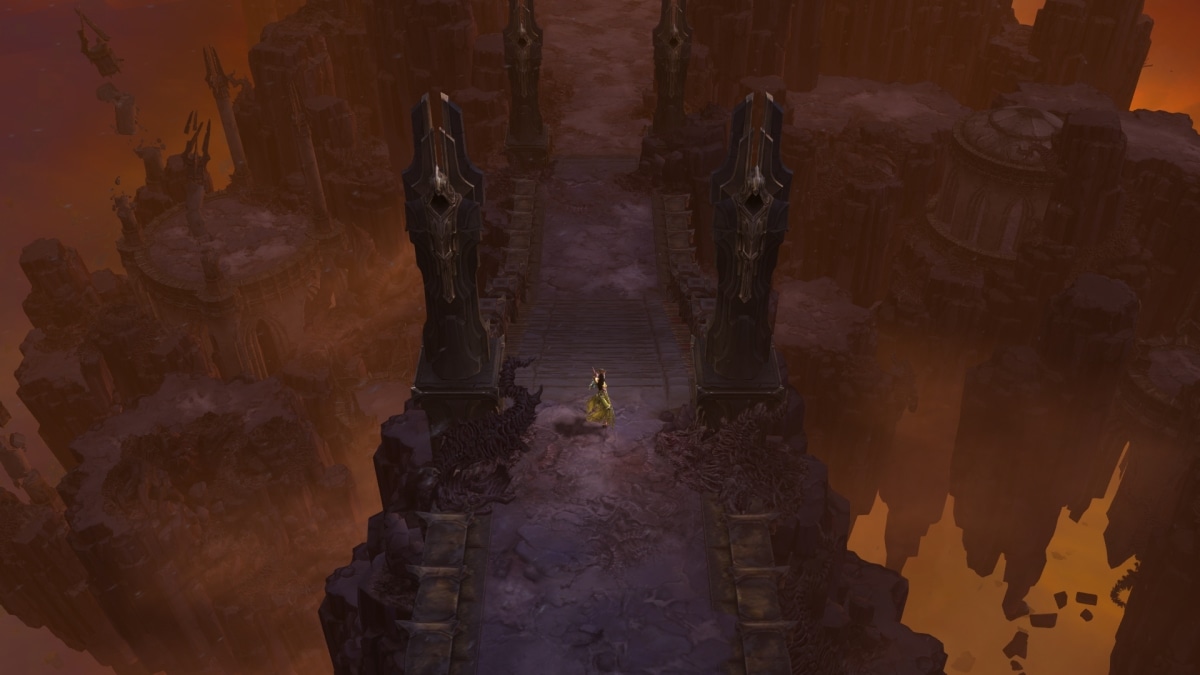
External zones are always the most challenging, but Pandemonium takes this to an entirely new level. Both the battlefields and the Fortress itself needed to encompass the feelings of being ancient and infinite without losing players in a way that would distract from gameplay. In particular, our designers carefully avoided the perception of being displaced or wandering in outer space. The challenge was in ensuring a sense of grandeur that could house colossal enemies, evoke the excitement of the unexplored, and still sell the basic idea of plumbing the depths of a massive, ancient fortress.
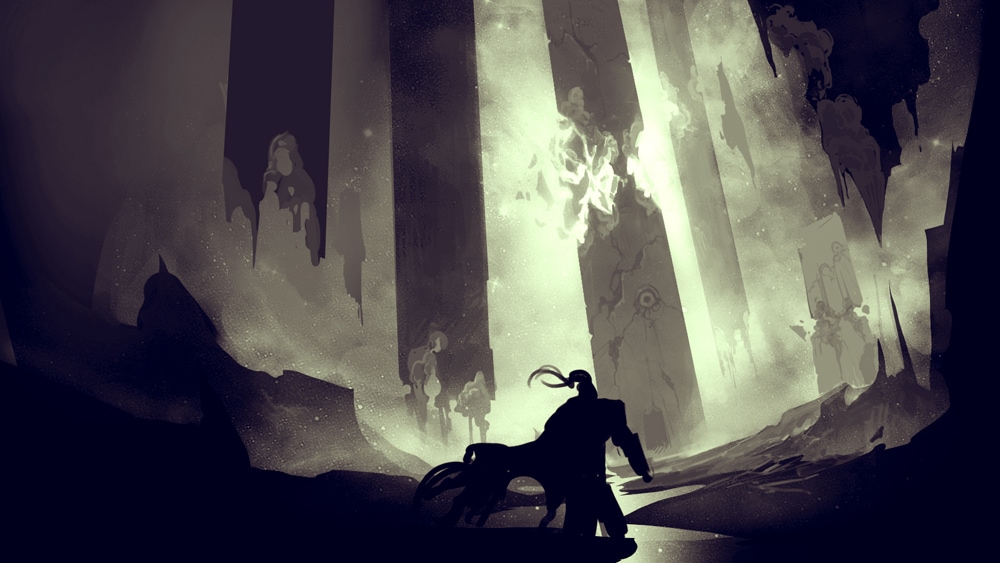
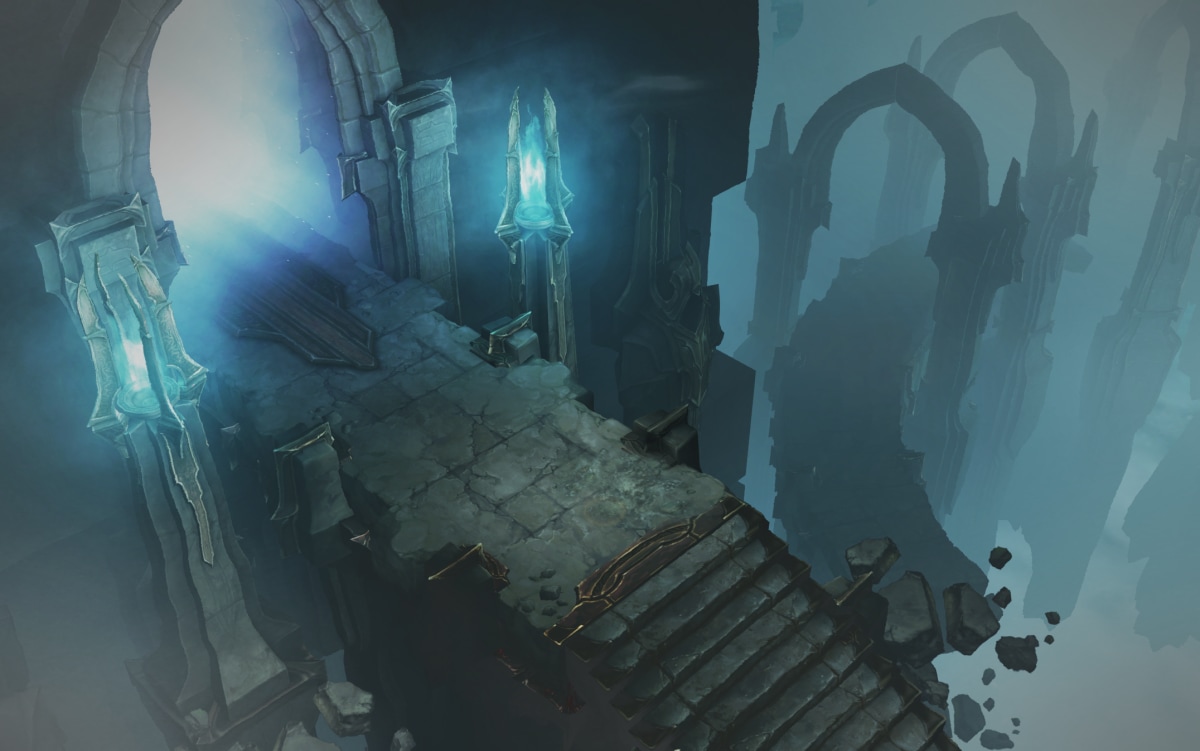
This sort of dungeon delving is hardly new to the Diablo franchise, let alone in Act V. Pandemonium Fortress needed to be different from the Ruins of Corvus in the Blood Marsh or Bastion's Keep at the edge of Arreat Crater. Instead of finding an earthly construct, you'll find this eerie keep maintains the notion of a militant garrison while distinctly lacking the trappings of what one would expect from a human site.
Getting into the perfect balance of extra planar and relatable took fare more than the thoughts of an individual. In speaking to Lead Level Designer Dave Adams, he shared some insight on "ideation days," a process that the design team utilized in exploring this space. "We break up into groups and try and create single scene events that take place on 240 foot by 240 foot tiles. Seeing what each group comes up with and how different those ideas can be is really amazing. We often use this to steer the direction on an area. We had a lot of awesome events that came out of that, and you'll experience them in the game."
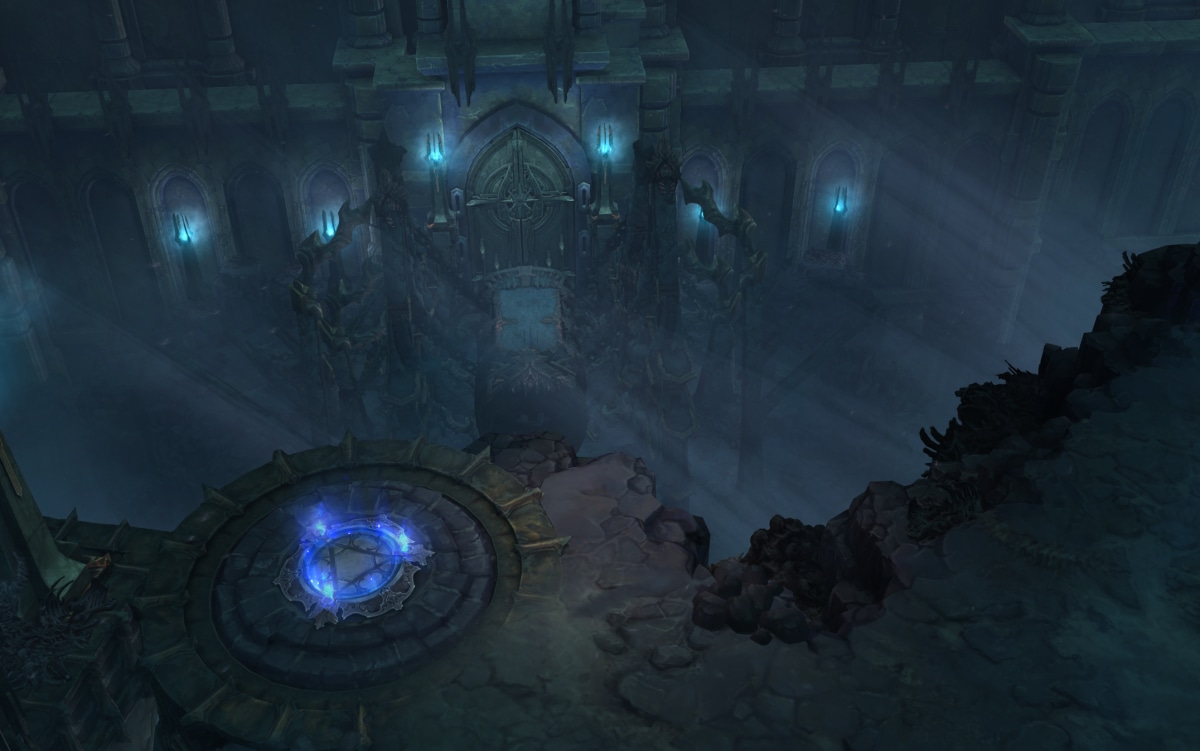
Knocking at Death’s Door: The Last Stand
The Pandemonium Fortress has become home to the starring villain of Diablo III: Reaper of Souls™. Malthael hopes to end the Eternal Conflict once and for all, regardless of what consequences and costs his actions might have. It is time now, heroes, to stretch beyond the limits of what you once believed possible and stop the Angel of Death from destroying all you know and love.
We hope you've enjoyed our First Look series behind the scenes of Act V's locations. Can no one truly stop Death? Let us know in the comments below what you’re looking most forward to tackling on the Battlefields of Eternity or within Pandemonium Fortress, and we hope you join us in the fight to save Sanctuary on March 25.